CATEGORIES
- Latest News
- Interviews
- Golf Travel
- Features
- Juniors
- Competition
- Events
- Health
- Equipment
- Fashion
- Archive
INFORMATION
CURRENT ISSUE

SUBSCRIPTIONS



CATEGORIES
INFORMATION
CURRENT ISSUE
SUBSCRIPTIONS




.jpg)
Words: Liesbeth Pauwels
My go-to pace used to be the speed of light. It’s been over a decade that I’ve been practicing slowing down because my body clearly couldn’t keep up with the pace that didn’t include any form of recovery. Initially, the transition was challenging, with my mind often racing with thoughts of guilt and shame whenever I took a moment to rest, or even tried to move more slowly, like in yoga. However, as I continued practicing and studying the topic at hand, I discovered a newfound sense of balance and strength.
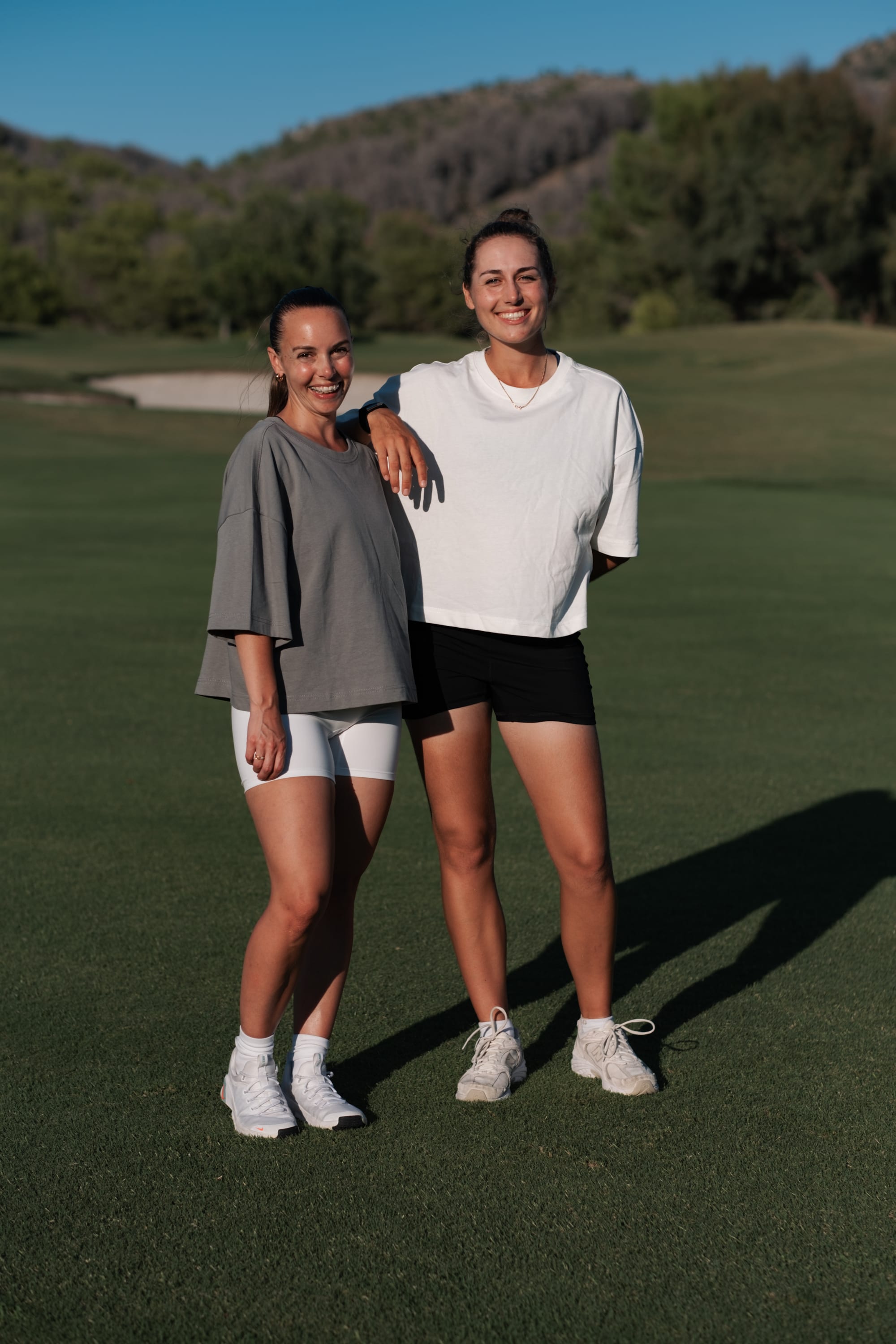
Today, I help others, including athletes like LPGA players, Nastasia Nadaud, to incorporate recovery elements into their lives on tour, recognizing that sustainable results and happiness out on the course comes from embracing all aspects of training. Let’s dive in.
Yoga can change your game and swing in many ways, and it’s not just about becoming more flexible. The biggest shift I see in golfers who practice yoga is actually in awareness. When you move through yoga poses and need to be mindful of their forms and the transition between them, you will also become more aware of the muscles that are engaged to help facilitate that. In these poses and moments of transition, we practice scanning for areas of tension and working to lessen muscular tension. Nothing restricts a fluid golf swing faster than tension in the mind or body. The aim is to reach for a certain balance in engagement but not be sloppy, to have power but still move really well, which is the same for in our swings. So, the level of engagement alone can help transform the set-up posture and how we move on the course. Over time, this also leads to a more efficient swing and a lower risk of injury.
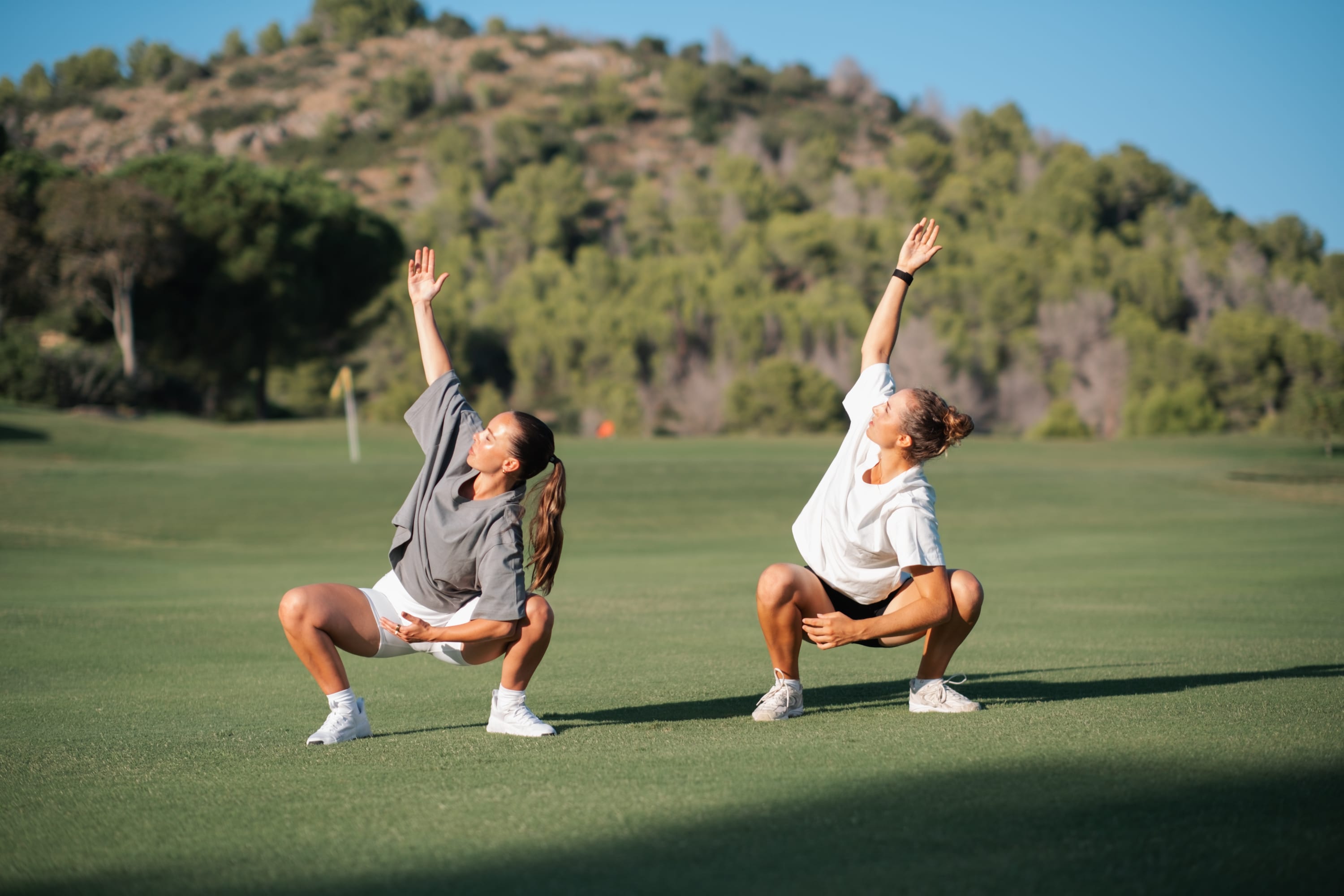
Breathing plays a key role too, and it’s often overlooked. Inefficient breathing affects posture, core stability, and rotation. In yoga,
there is so much focus on the breath in synchronicity with movement, because good breathing creates good motion. When breathing patterns
improve, rotation becomes smoother, more controlled, and more powerful. And breathing is a phenomenal tool to help regulate during pressure
moments or big drives.
Golf is repetitive and rotational, yet every shot is different. Yoga can additionally teach us how to adjust the body safely, improving balance, stability, and mobility. When you can practice that in a safe controlled setting, this will also become easier out on the course. Then naturally the repetitive motion of the swing needs to be offset, and balance needs to be brought back into the nervous system, muscles, joints and spine. Which some forms of yoga and poses are excellent tools for. I wouldn’t necessarily recommend doing a lengthy yoga practice before playing, but after playing, it is perfect.
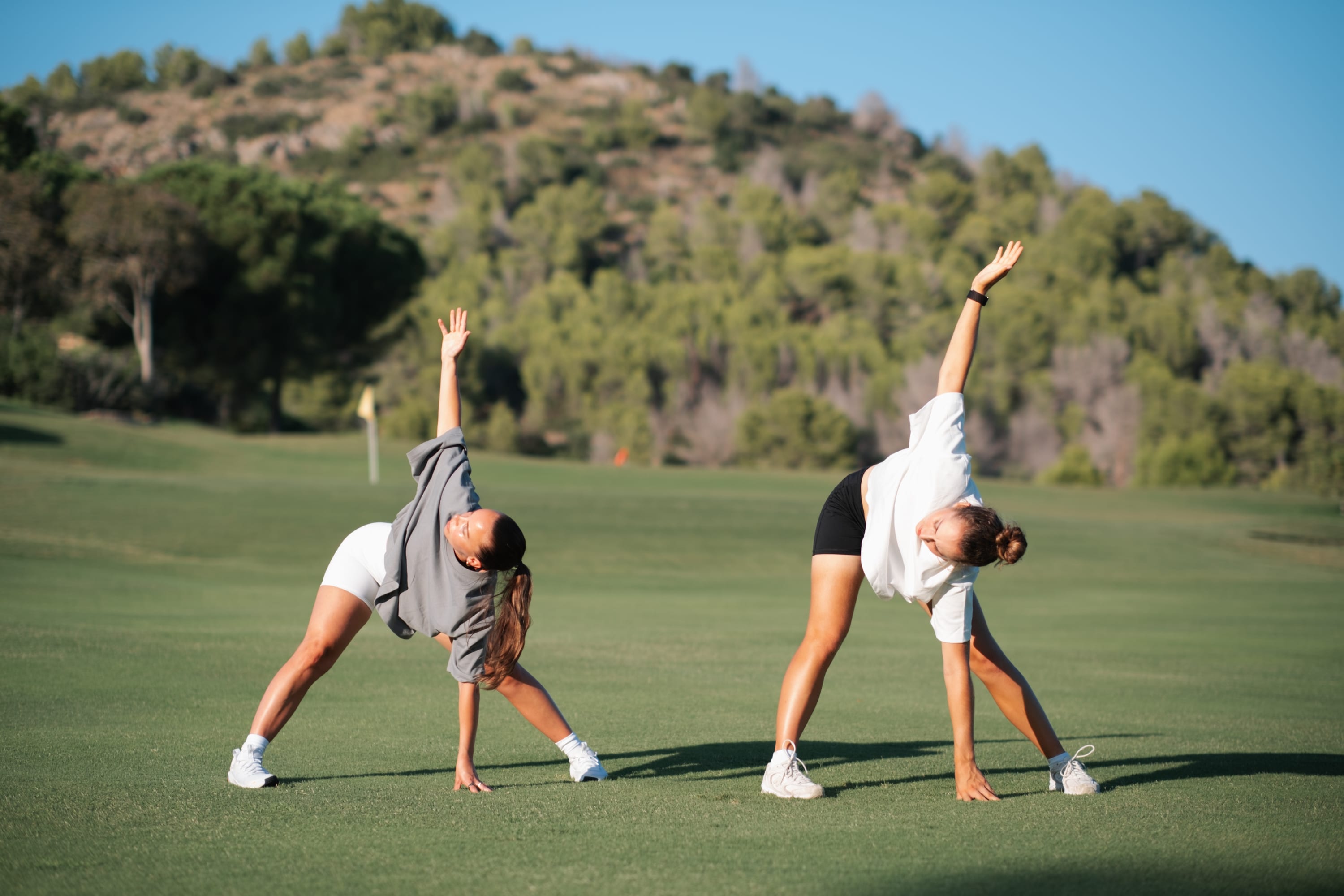
I hope to relieve the pressure by reminding people that it’s not about how flexible we become or how fancy our yoga poses are. Rather, it’s about stability. Stability in the body and in the mind. This is especially important for female players. As females are generally already efficient enough at flexibility, there is no need for more of that. In fact, only adding flexibility without stability could lead to injuries and very low power. Instead, girls and women of all ages benefit from cultivating stability and building strength.
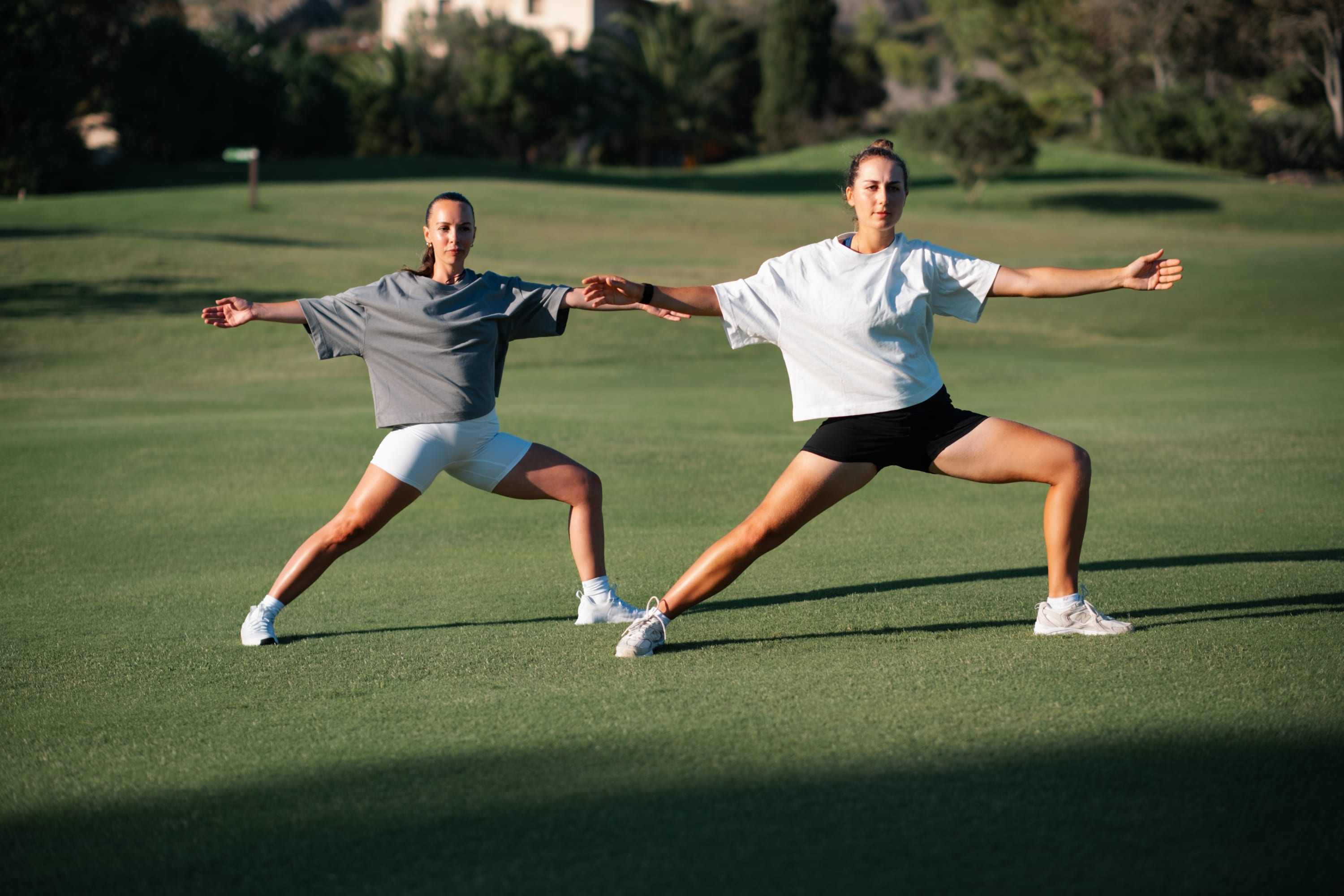
That’s why I love integrating the warrior II pose. From a standing position, step one foot back and ground through the outer edge of the back foot. Bend the front knee while keeping the back leg strong and active. Open the hips and chest to the side. The lower body is where you want to focus on. Are your feet firmly rooted into the ground? Are your hips open, not closed? Are you engaging, rather than squeezing, your pelvic floor? Only then begin to extend both arms at shoulder height. Keep the shoulders low and soft, just like the muscles in the neck and face. Breathe towards the sides of the ribcage. Feel the legs working for strength, while the torso remains stable and steady. This pose builds lower-body strength, pelvic and spinal stability, and controlled rotation, qualities that are essential for female golfers who often have good flexibility but need more support and strength through the swing.
“After our sessions, I feel like a whole new person,” Nadaud says. “Even though the workouts are challenging, afterward, my body isn’t in overdrive anymore and my mind feels calmer. It helps me ground myself and unwind from the adrenaline rush. Since working with Coach Lizzy, I am experiencing how my training is more about me as a person, not just a golfer, and it’s made a big difference in how I’m feeling and the way I’m playing.”
Disclaimer: Consult with your coach or certified trainer before adding new exercises to your routine.
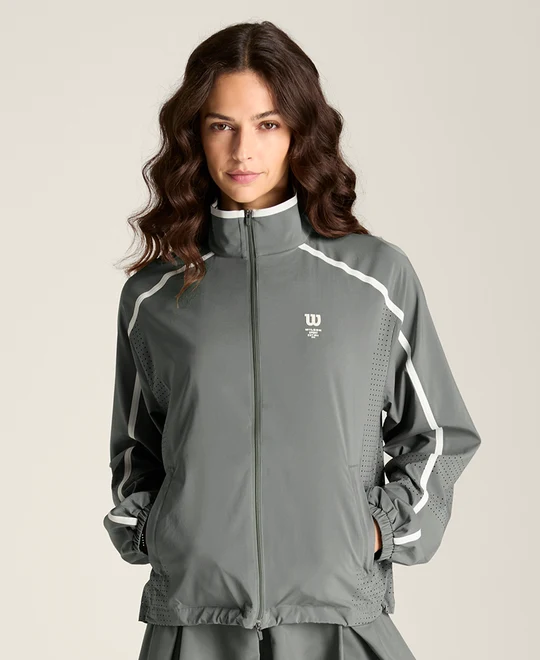
Wilson Victory Tech Jacket
From the course to the clubhouse. This fab jacket is sweat-friendly and ultra-lightweight. It’s the perfect protection for when the wind
buffs the fairways. Perforated side panels keep air flowing and the relaxed, modern silhouette turns heads. Get it. $148
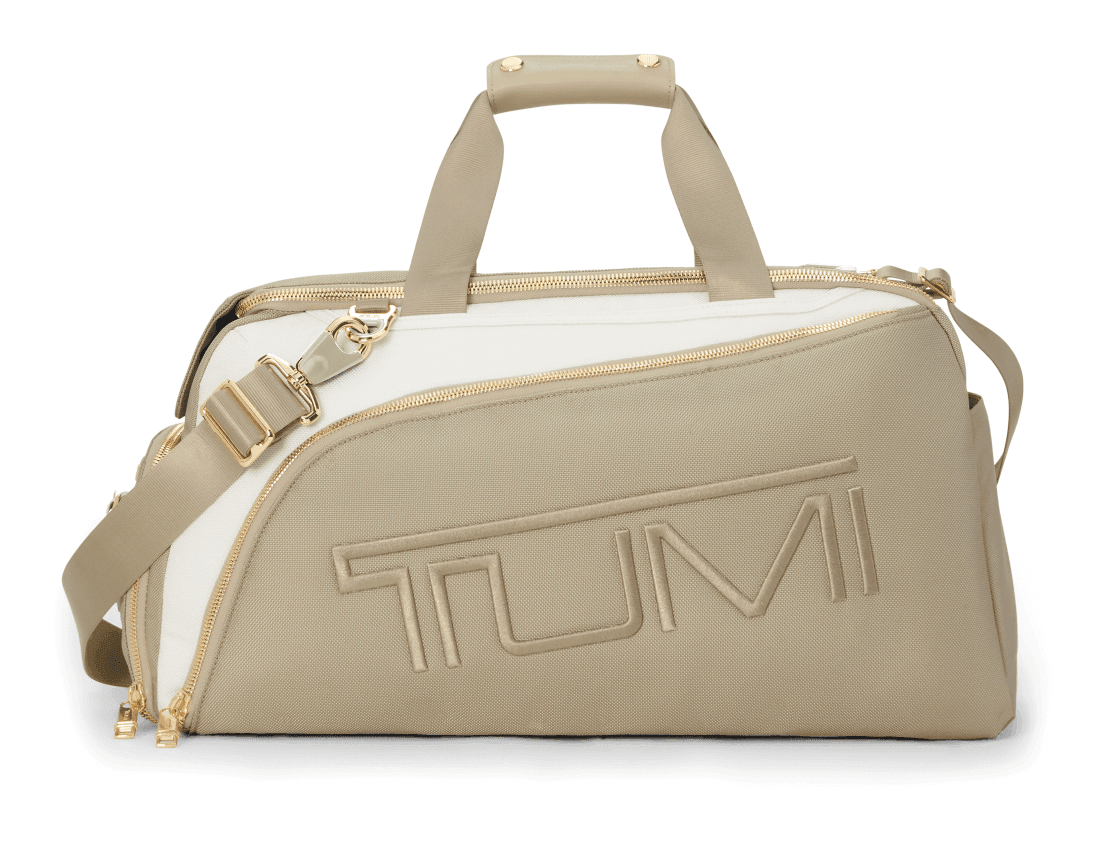
TUMI Sport Duffel
Hit
the green with a bag personalized to your game. Choose to carry it as a duffel or backpack and add the embroidery of your choice. TUMI
brand ambassador Nelly Korda knows style and function are paramount and so do we. $695
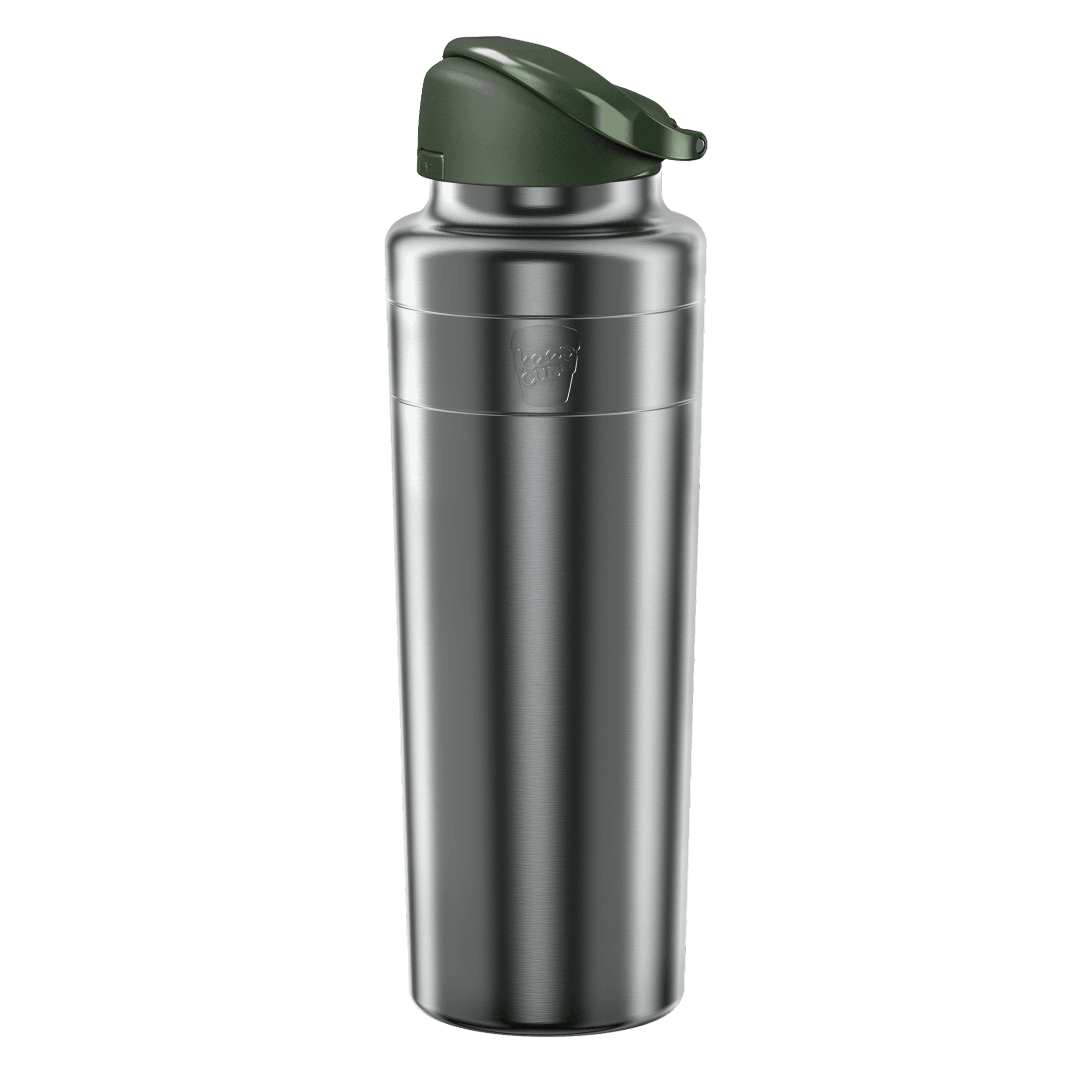
KeepCup Ora Bottle in Nitro Pine
Why you'll love it! This KeepCup Ora Insulated Water Bottle allows you to sip through the straw or chug from the spout- one
bottle, two ways to drink. Made for all-day hydration! Perfect for 18-holes on the golf course or to take from your desk to
dinner. $50

Flag &
Bow x Kristen Nicholls Polo Sweatshirt — Dog in Golf Cart
A limited-edition collaboration celebrating women in golf. This relaxed polo sweatshirt puts a fresh spin on classic golf style with a
polished collar and the Dog in Golf Cart design. Even better, $5 from every sweatshirt sold will be donated to Puppies & Golf. $105



-52.jpg)