Words: Liesbeth Pauwels
In golf fitness, rotational power and mobility often take center stage. Yet, cardiovascular fitness plays an important role too. In an
all-round program, it keeps golfers strong, fully energized and sharp across 18 holes. The key is knowing what kind of cardio supports golf
performance and how to train it.
The Full Picture
Golf is a low-intensity cardiovascular activity. A round alternates between brisk walking and long pauses for standing or swinging, making
it primarily aerobic, similar to endurance sports like running, rowing, or cycling. Sustaining three to five hours on the course requires a
reasonable baseline of cardiovascular fitness.
Check-In
For those who notice little change in breathing or heart rate during a round and can easily hold a conversation, cardiovascular endurance
fitness is likely not the primary limiting factor. The heart and lungs can operate at low intensity for long periods, and the body naturally
adapts to repeated activity, like for golfers who walk courses regularly or competitive golfers who have been playing for years. However, if
someone struggles with shortness of breath or has difficulty lowering the heart rate between shots, the cause (and answer) is often not
golf-specific fitness but underlying health or lifestyle factors.
Power
Walking the course is mostly aerobic (endurance-based), but the golf swing itself is very anaerobic: power-based. Golf swings are short
bursts of high force production. This requires the engagement of fast-twitch muscle fibres (Type II fibres), which can be trained through
high-intensity, explosive movements in the gym. This is what we call power training and it requires both strength and speed. Think of it as
the opposite of long, steady cardio like jogging or cycling at an easy pace. Instead of cruising along, you push hard for a short time, then
rest fully before repeating.
HR Zones
If you use a smartwatch or wearable, you’ll often see this measured in “zones.” Long slow cardio usually happens in zone 2–3 (easy to
moderate effort). For golf-specific cardio, we’re aiming for zone 4–5 (hard to very hard effort), but only in short, controlled doses.
Short & High
Short, fast interval training does more than elevate heart rate. It trains both the aerobic system for endurance and the anaerobic system
for power simultaneously: a true two-for-one benefit. Even after the session ends, the body continues to adapt, boosting overall fitness.
For golfers, this type of training builds the speed and acceleration the swing demands, adding distance, making the swing more explosive,
increasing energy, mental concentration, and supporting long-term health and longevity.
Train Smart
Focus on quality, acceleration, and good form, not volume or distance. But intensity without control is reckless and often leads to injury.
After a full body warm-up and when you uphold movement quality inside these cardio-speed training sessions, you train your body to handle
intensity safely. Your joints are protected. Your muscles are firing correctly. You generate more power because you're using better
mechanics, not just sheer effort. When I’m working with elite players, my goal isn’t just to make them better at fitness, but
transferability: preparing their body to repeat powerful, precise swings under real course and tournament conditions. This is how you get
fitter, stronger, and faster without draining energy.
Hyrox?
Many golfers already average 10,000 steps daily. If you really love running, go for it: but I wouldn’t recommend adding more long runs, and I
definitely don’t advise it for my professional players. For Tour athletes, long slow cardio just adds unnecessary stress on top of what’s
already there, without actually improving their game performance. In fact, long runs can increase the risk of overuse injuries in the knees
and ankles and drains cognitive function. Whereas sprinting can load the hamstrings with forces up to seven times your body weight if you’re
not conditioned for it. An all-round golf program with smart progression and overload is the best route.
Unlock Your Potential:
-
Tour players: Generally, need more high short sprints (anerobic) training as the level of the Tour increases. Swing speed
drives scoring opportunities and overall performance. A solid base is also important across multiple tournament weeks and long seasons with
international travel.
-
Recreational golfers: The short interval training will mainly benefit general health, energy, and recovery. Short,
intense intervals improve power production, without excessive wear-and-tear.
-
Juniors: certain windows of opportunity make it especially important to train speed and explosiveness early, building the
foundation for future performance.
-
Age factor: Fast-twitch fibers naturally decline with age. Speed sessions reactivate these dormant fibers, preserving
swing power and reducing injury risk. It helps prevent the loss of strength that affects vitality and longevity.
-
The Busy-life golfers: Short, intense sessions are especially valuable because they deliver maximum benefit in minimal
time.

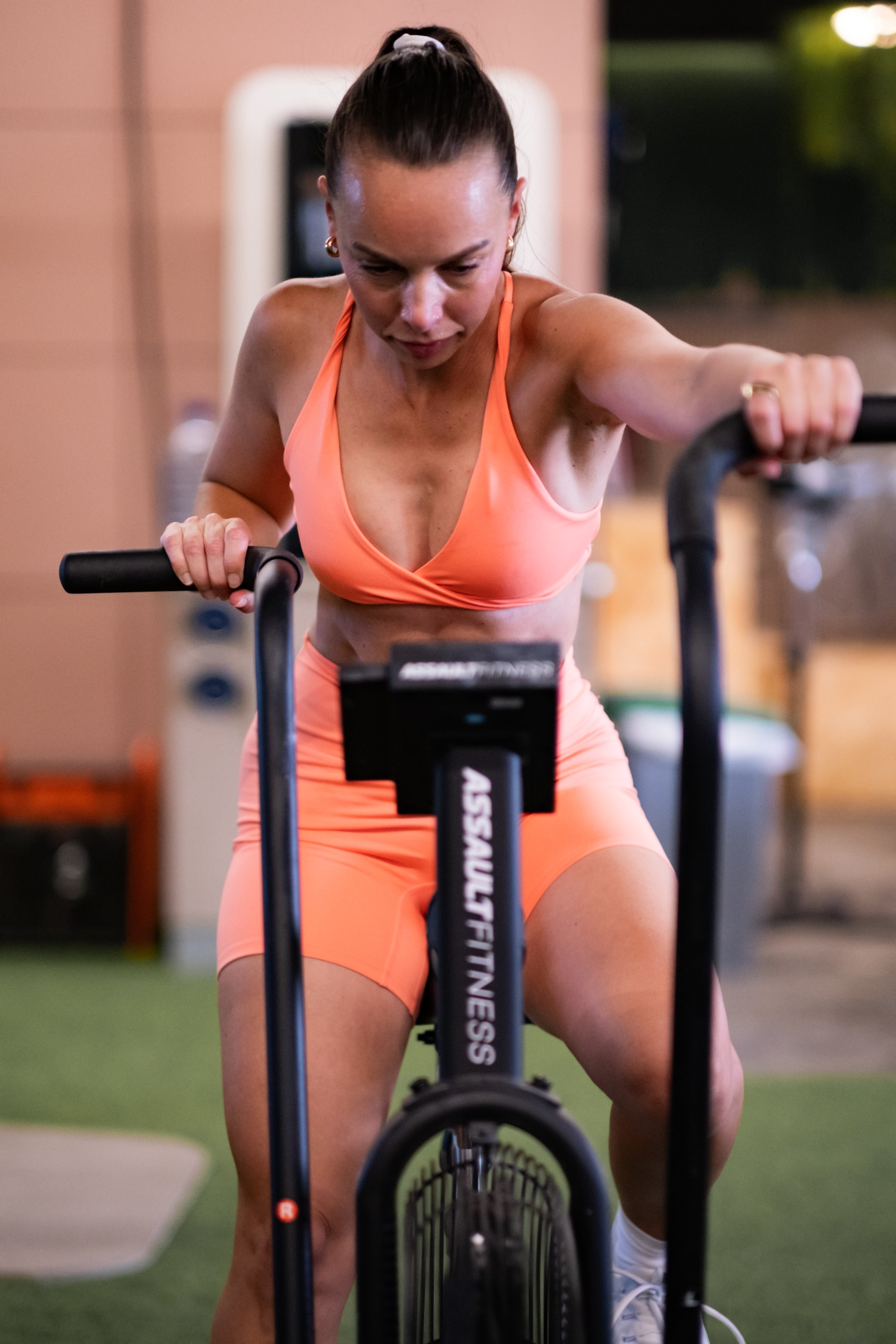
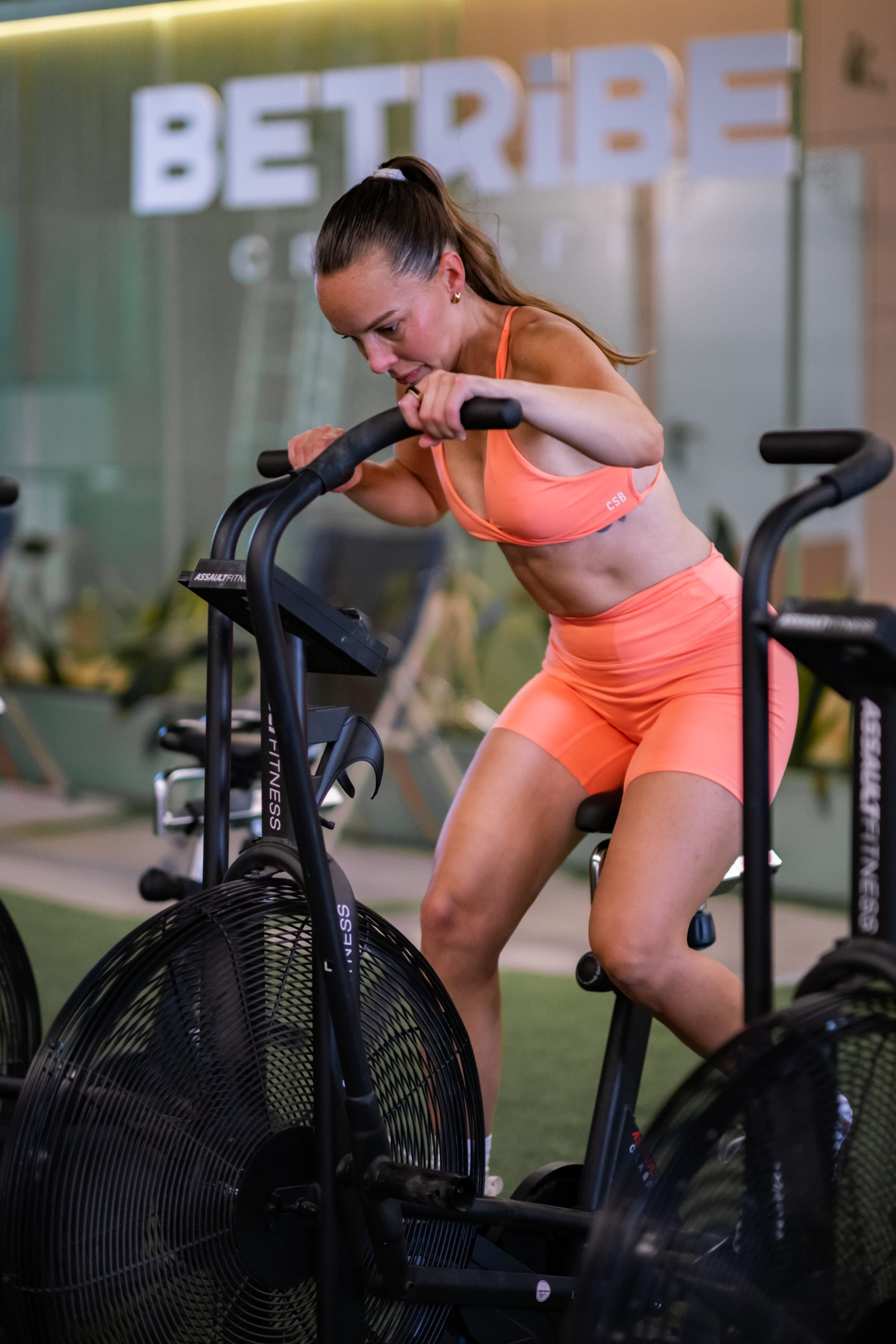
Photo: A golf-specific tool for speed cardio training is the Assault or Echo bike. It allows high-intensity sprint intervals without
overloading joints or risking abrupt hamstring injuries.
IN THE GYM
Structure:
- Effort: all-out
-
Reps: 3–6 or 10 to 25 seconds
-
Rest: 2–3 minutes between sets
- Sets: 3–8 per workout
-
Frequency: 1–2 sessions per week
-
Exercises: choose 1 or 2 per
session
Exercise options:
- Bike sprints
- Sled push
- Farmer carries
- Ground squat jumps
- .Jump rope
- Kettlebell swings
Focus:
- Always, always warm up first
- Move sharply and explosively
-
Don’t trade movement quality for
extra/longer reps
-
Skip exercises on unstable surfaces
- Rest long enough to stay powerful
-
Don’t train when slow, sloppy, or fatigued
-
Adjust, regress, or modify as needed
-
Sessions need to be part of an all-round
program, not something to train exclusively
Cardio for golf isn’t about more running hours or distance. The biggest difference comes from short all-out outputs. What I ultimately want
for us: to become someone who can stay strong under pressure, and we will…because we’ve trained it.
Find more of Liesbeth's fitness at : lpgolfperformance.nl | @lp.golf.performance







.jpg)

.jpg)