CATEGORIES
- Latest News
- Interviews
- Golf Travel
- Features
- Juniors
- Competition
- Events
- Health
- Equipment
- Fashion
- Archive
INFORMATION
CURRENT ISSUE

SUBSCRIPTIONS



CATEGORIES
INFORMATION
CURRENT ISSUE
SUBSCRIPTIONS





Photo: Nelly Korda at the U.S. Women's Open, courtesy of the USGA.
By Jimmy Emanuel
Activist Marian Wright Edelman wasn’t talking about women’s golf when she said, “You can’t be what you can’t see”; however, the American’s
utterance promoting visible role models certainly applies to elite women’s golf.
Young girls need to see the best players in the world not only to inspire the next Nelly Korda or Jeeno Thitikul but also to continue to grow the sport and equalize the participation gender imbalance.
So too does the world need to see more of the most talented female golfers to help grow player profiles, promote the quality of competition and increase investment.
This year was touted as an improved chance for all and sundry to do exactly that through expanded LPGA live broadcasts featuring more cameras and player interviews, TrackMan-powered tracers and drone footage.
Increasing the week-to-week quantity and quality of women’s golf broadcasts is no small undertaking and one that deserves praise, yet when the golf world arrives at its biggest weeks, again 2026 failed to give women’s golf its major moment.
All five of the major championships – The Chevron Championship, U.S. Women’s Open presented by Ally, KPMG Women’s PGA Championship, The
Amundi Evian Championship, AIG Women’s Open – have grown drastically.
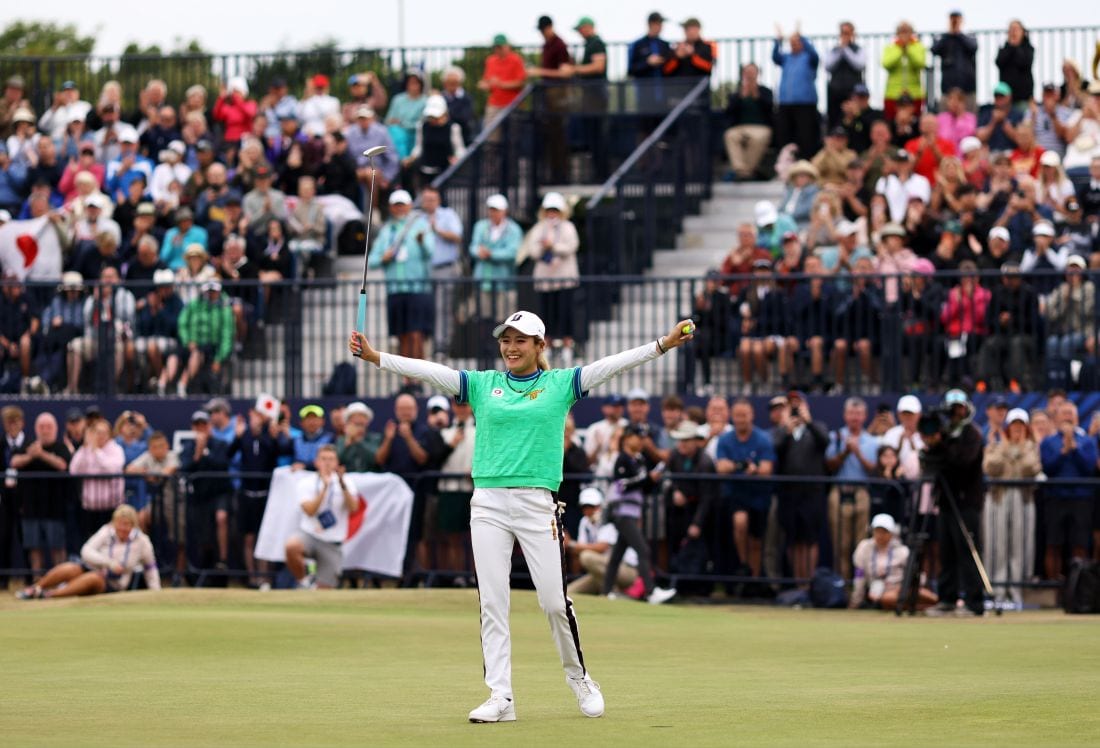
Photo: 2026 AIG Women's Open
Prize money is always headline fodder, and each of the five grand slams has supercharged purses in recent years, with only Evian sitting below the $10 million threshold – albeit the combined major purse is still nearly half the men’s even with an additional event.
Although having more money on offer is important and deserving of recognition for sponsors and administrators alike, the chance to see what you can, or for many not, be is no doubt of more importance for ongoing growth of women’s golf.
Although increased, the hours those at home can watch women’s majors still sit well below men’s without even considering the multitude of additional streaming options to watch featured groups or holes that are incomparable between men’s and women’s events.
Utilizing the official guides for each major published by the two biggest respective Tours (LPGA and PGA TOUR) and US broadcasts as the datasets to compare provides for stark reading.
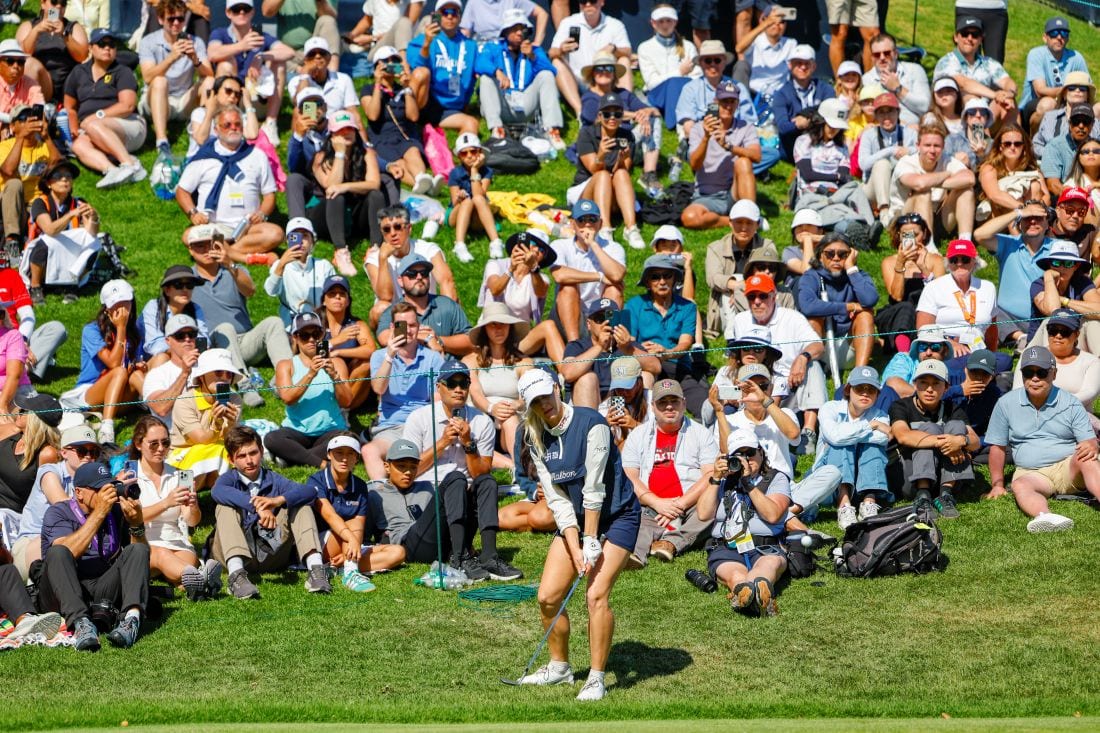
Photo: Charley Hull at the 2026 U.S. Women's Open, courtesy of the USGA.
Across five events, the main broadcast of women’s majors in 2026 averaged 26 hours per event.
Comparatively, the four men’s majors came in with 42.63 hours per tournament, a number which was significantly reduced by The Masters’ minimal 27 hours, with the benchmark for all golf broadcasts instead offering an abundance of other streaming options.
The hour differential is eye-opening enough on its own; however, the uneven playing field is widened when considering what women’s majors are competing against.
The middle of this major season when Nelly Korda was chasing a hat-trick at the KPMG Women’s PGA Championship proved a case in point when one of the leading journalists covering women’s golf, Beth Ann Nichols, clarified the reasoning for a surprisingly early 9:25am tee time of the final group.
“For those asking, the early finish for the third LPGA major of the season has nothing to do with weather. It’s because PGA Tour coverage begins on NBC at 4 PM,” Nichols posted to X.
The PGA TOUR coverage in question was the Travelers Championship, one of the top men’s Tour Signature Events offering fans its full range of stars, while weather delays on Sunday at Hazeltine meant the finish to the women’s major would fall outside of the broadcast window.
Finishing a major early to clear the stage for another tournament is an issue in and of itself, with scheduling failing to shine a light on the biggest championships in women’s golf not a one-time concern.
In 2026 alone, the women’s majors all went against men’s events on the major Tours, with Korda’s second consecutive major win at the U.S. Women’s Open going against another PGA TOUR Signature event, LIV Golf, DP World Tour and Asian Tour action.
The AIG Women’s Open was fortunate to only line up with one event, while the Chevron took on three, KPMG and Evian two apiece.
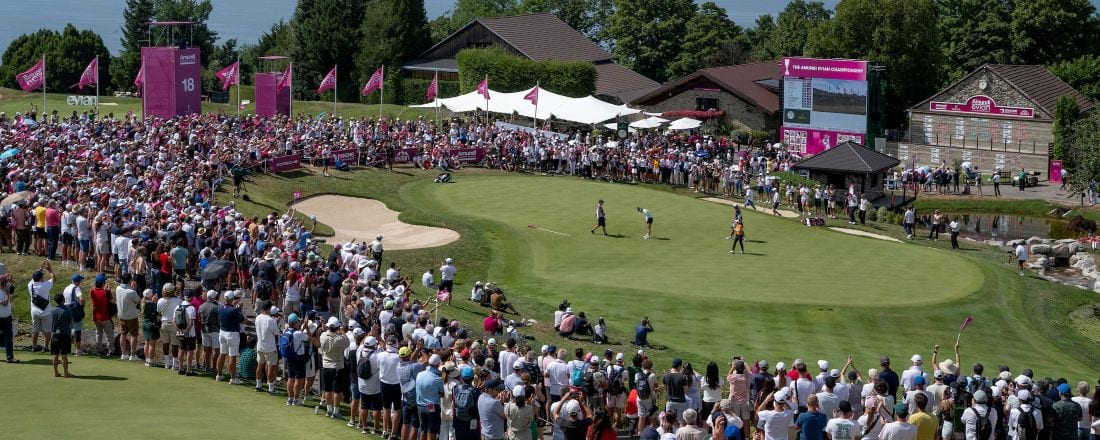
Photo: The Amundi Evian Championship, courtesy of Rolex.
The number of opposing events does not paint a full picture, particularly in the case of Evian, which fell in the same week as the PGA TOUR and DP World Tour co-sanctioned Scottish Open, one of the biggest events outside America in world golf played in a similar time zone.
By comparison, The Masters did not have a competing event, nor did the men’s Open Championship, while both the LPGA and Ladies European Tour played smaller events during the weeks of the PGA Championship and U.S. Open.
Scheduling is difficult for all golf circuits; however, as the golf world undertakes another shift in landscape with the significant questions over the future of LIV Golf, an opportunity presents itself.
With men’s golf appearing to head toward partial reunification and more optimized scheduling, at least from the PGA TOUR, the hope is the leaders of world golf include women’s golf in their crystal-balling and remove future clashes involving women’s majors.
A shared vision to support one another and increase women’s interest and participation would also strengthen men’s golf in the future with a larger audience, a vision that should be supported by doing away with another issue that has plagued women’s major championship weeks in recent years.
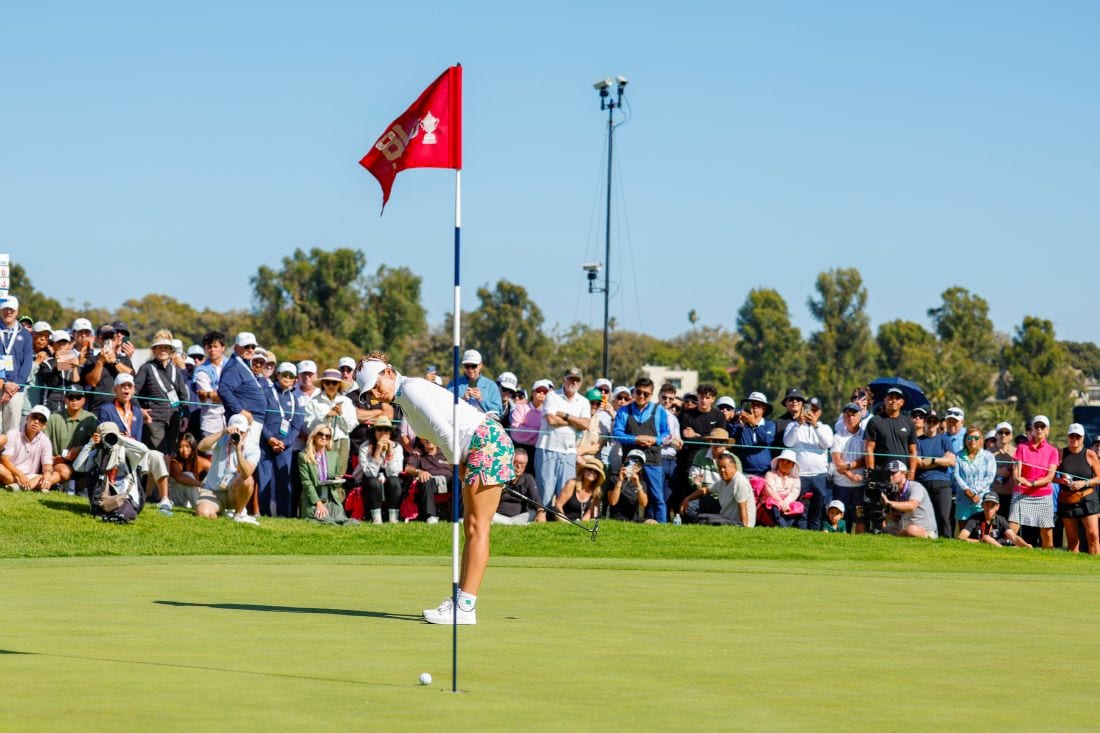
Photo: Gaby Lopez at the U.S. Women's Open, courtesy of the USGA.
Sometimes beyond control, as in the case of scandalous allegations regarding Phil Mickelson during the week of the 2026 KPMG, the five biggest weeks of women’s golf have often been when big stories and announcements about men’s golf landed, including the PGA TOUR’s new competitive structure.
Announced on June 23, two days prior to the first ball being in the air at Hazeltine for the KPMG Women’s PGA, a major shift from the world’s biggest men’s Tour took the column space and media attention from the likes of Thitikul, Minjee Lee, Ruoning Yin and the heads of the PGA of America and LPGA Tour conducting press conferences at Hazeltine.
Focusing the sport in one direction for five weeks of the year is no small task, but a worthwhile one.
As the saying goes, “Rome wasn’t built in a day”, but it had to start somewhere and the time is right for a concerted effort and commitment, because women’s elite golf has never been better, the broadcasts have never been better, and the time to shine the light could not be more perfect.
Just ask one of the best ever.
“I think it's what the players and the Tour deserve ... visibility and television coverage play major roles in elevating the players and the sport,” Lydia Ko said.
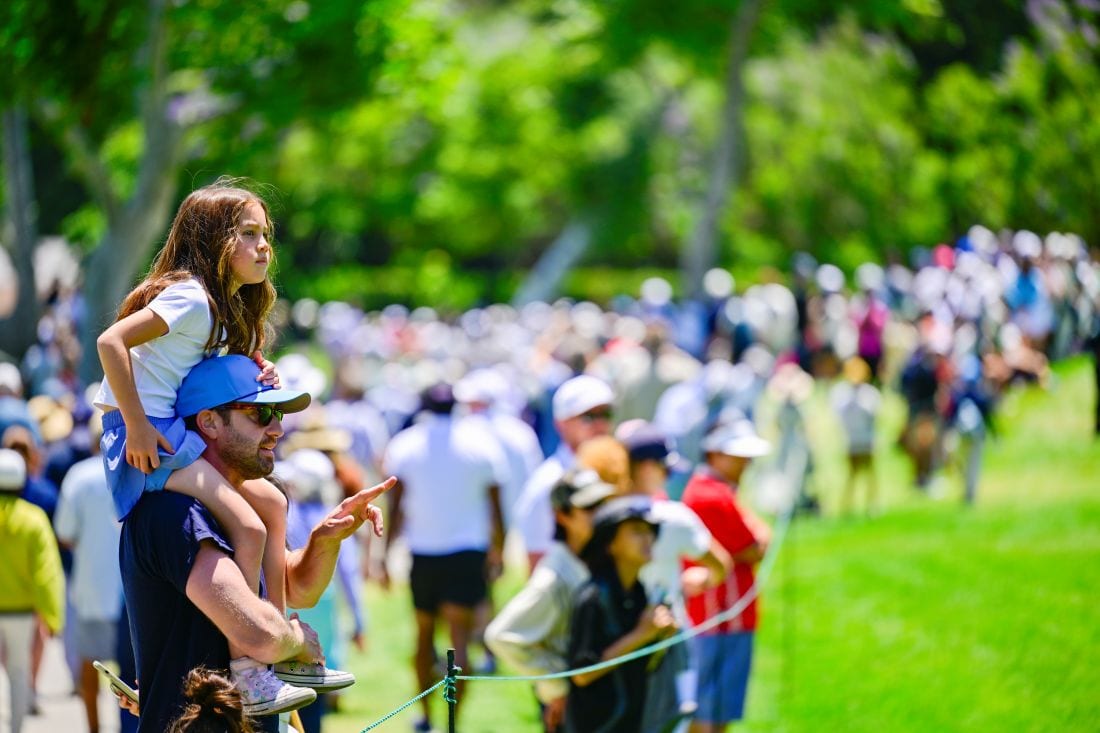
Photo: Spectators at the U.S. Women's Open, courtesy of the USGA.
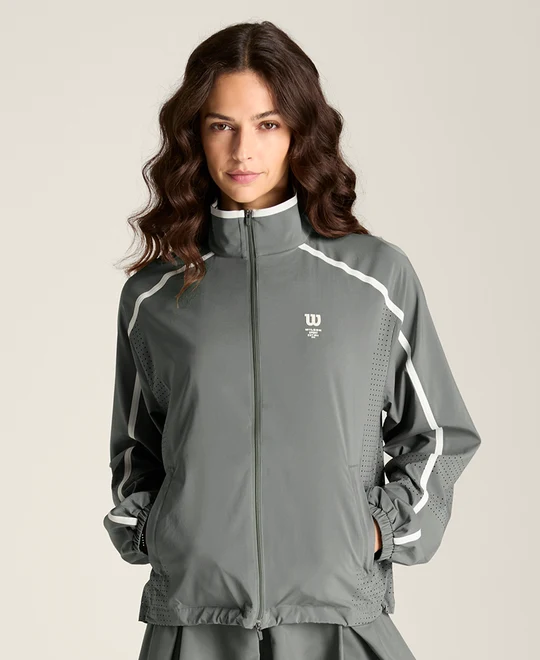
Wilson Victory Tech Jacket
From the course to the clubhouse. This fab jacket is sweat-friendly and ultra-lightweight. It’s the perfect protection for when the wind
buffs the fairways. Perforated side panels keep air flowing and the relaxed, modern silhouette turns heads. Get it. $148
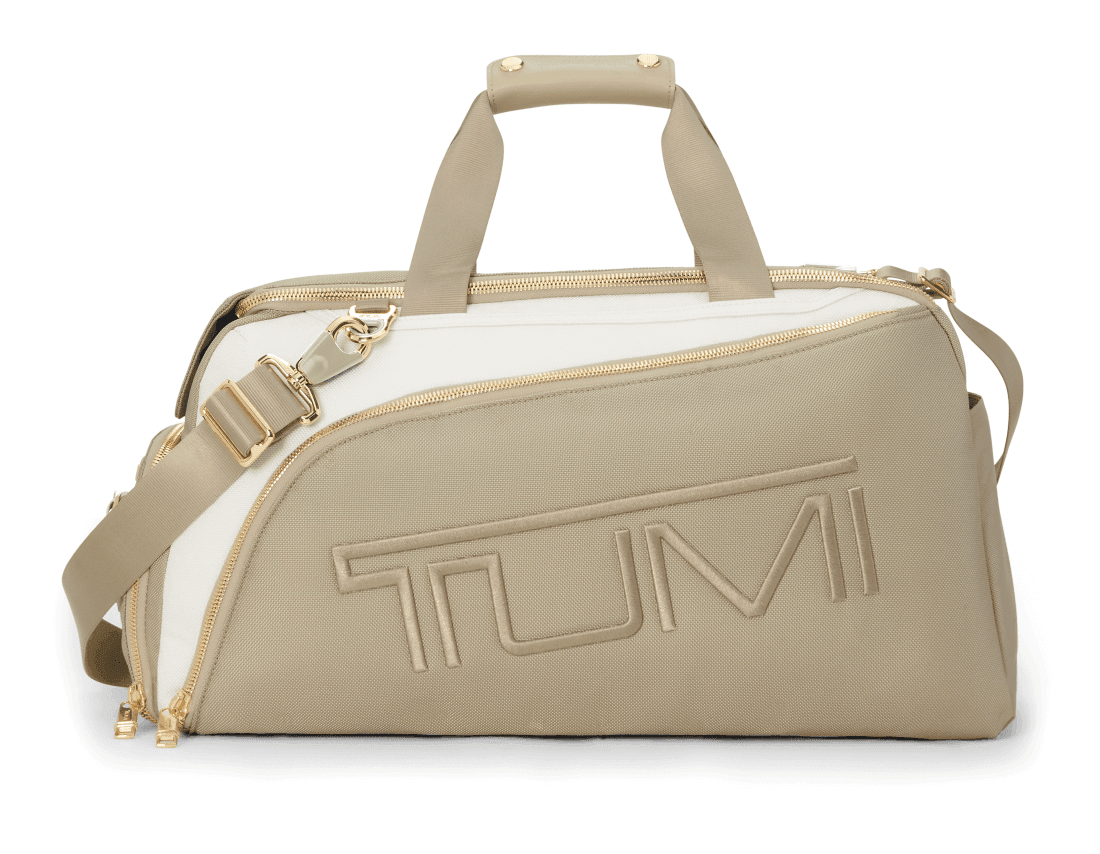
TUMI Sport Duffel
Hit
the green with a bag personalized to your game. Choose to carry it as a duffel or backpack and add the embroidery of your choice. TUMI
brand ambassador Nelly Korda knows style and function are paramount and so do we. $695

KeepCup Ora Bottle in Nitro Pine
Why you'll love it! This KeepCup Ora Insulated Water Bottle allows you to sip through the straw or chug from the spout- one
bottle, two ways to drink. Made for all-day hydration! Perfect for 18-holes on the golf course or to take from your desk to
dinner. $50

Flag &
Bow x Kristen Nicholls Polo Sweatshirt — Dog in Golf Cart
A limited-edition collaboration celebrating women in golf. This relaxed polo sweatshirt puts a fresh spin on classic golf style with a
polished collar and the Dog in Golf Cart design. Even better, $5 from every sweatshirt sold will be donated to Puppies & Golf. $105