CATEGORIES
- Latest News
- Interviews
- Golf Travel
- Features
- Juniors
- Competition
- Events
- Health
- Equipment
- Fashion
- Archive
INFORMATION
CURRENT ISSUE

SUBSCRIPTIONS



CATEGORIES
INFORMATION
CURRENT ISSUE
SUBSCRIPTIONS



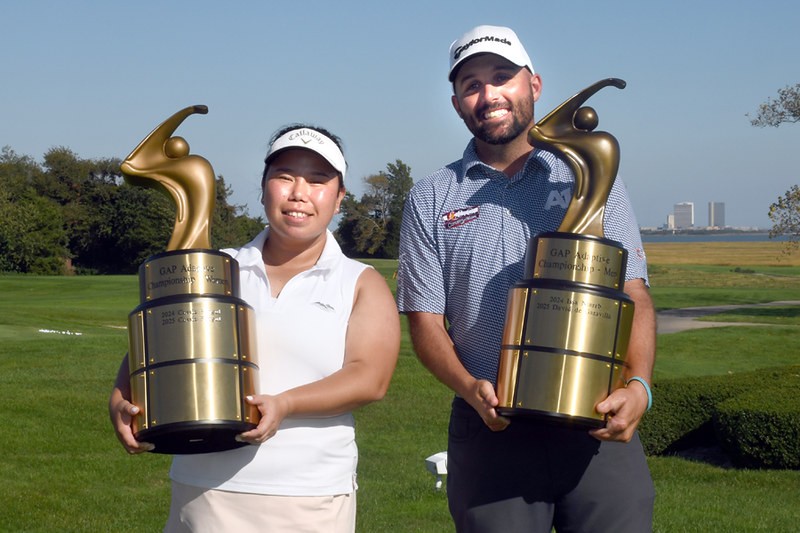
All photos courtesy of GAP Golf.
Fresh off her GAP Adaptive Championship victory, the 22-year-old golfer is combining competitive success, collegiate experience and a
passion for introducing the next generation to the game.
By Meredith Otero
Amanda Cunha doesn't spend much time worrying about where she stands on the leaderboard. For the 22-year-old golfer from Kaneohe, Hawaii, her focus is on the shot in front of her, while her father and caddie, Larry, handles the scorecard. It's a partnership built on trust, communication and an understanding of each other's roles, both on and off the golf course.
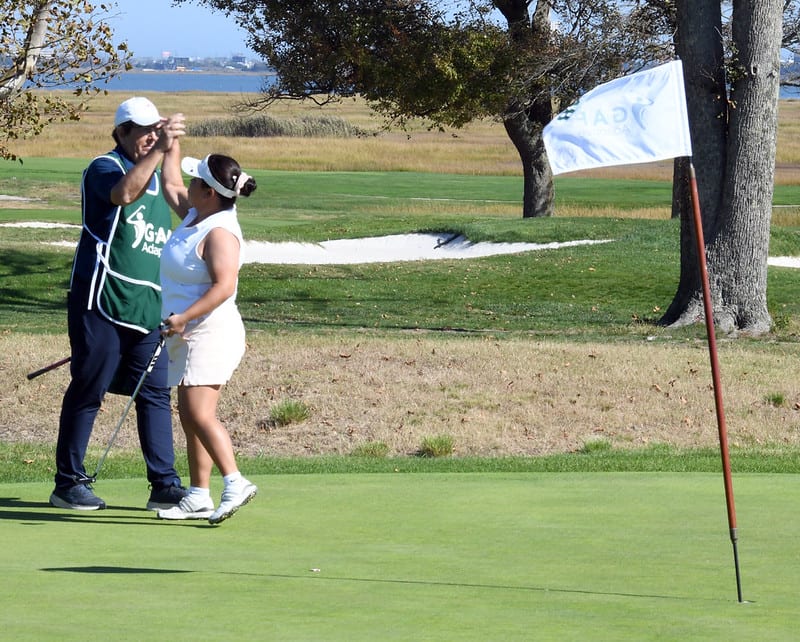
That approach recently helped Cunha capture the Women's Overall Division title at the third GAP Adaptive Championship, held October 12–13 at Atlantic City Country Club in Northfield, New Jersey. After 36-holes, Cunha secured a two-stroke victory over two-time defending champion Cassie Sengul, adding another accomplishment to a competitive resume that includes a classification win at the inaugural GAP Adaptive Championship in 2024.
"It means so much to win this tournament," Cunha shared. "Since graduating from the University of Arizona I have worked really hard on my game and training to play great golf."
Entering the final round tied with Sophia Howard, a former teammate and friend from the University of Arizona's Adaptive Golf Team, Cunha welcomed the competitive pressure. While some players prefer to know exactly where they stand throughout a round, she has found that concentrating on her own performance, rather than the leaderboard, allows her to play her best golf.
"I thrive on stress and pressure," she explained, adding that having competitors close in score helps keep her focused. As for keeping track of the leaderboard, she has a fairly straightforward approach: "My dad who caddies for me can worry about scores."
That mentality was put to the test late in the championship when a tee shot found the water. Rather than allowing one mistake to unravel her round, Cunha regrouped and executed her next shot with a 7-iron, finding the green and limiting the damage. She went on to finish with a final-round 80 after an opening-round 82, securing a victory that reflected both her preparation and ability to manage the challenges of competitive golf.
For Cunha, those challenges extend beyond the typical demands of tournament play. In May 2021, as she was finishing her junior year of high school, her vision began deteriorating as a result of Leber Hereditary Optic Neuropathy, a rare genetic condition affecting the optic nerve. She had started playing golf around age five and competed with local and state organizations in Hawaii before losing her vision. The diagnosis came during what had already been a promising junior golf career, requiring her to adapt the way she approached a game she had spent years learning and competing in.
Today, Cunha has no central vision, although she can distinguish certain high-contrast features on the course, including tree lines and bunkers. Her father plays an essential role in helping her navigate each hole, communicating yardages, identifying targets and assisting with alignment throughout their preshot routine.
"He is my eyes on the golf course," Cunha explained. "He tells me every yardage and every where the flag is and if it's in the front, middle or back."
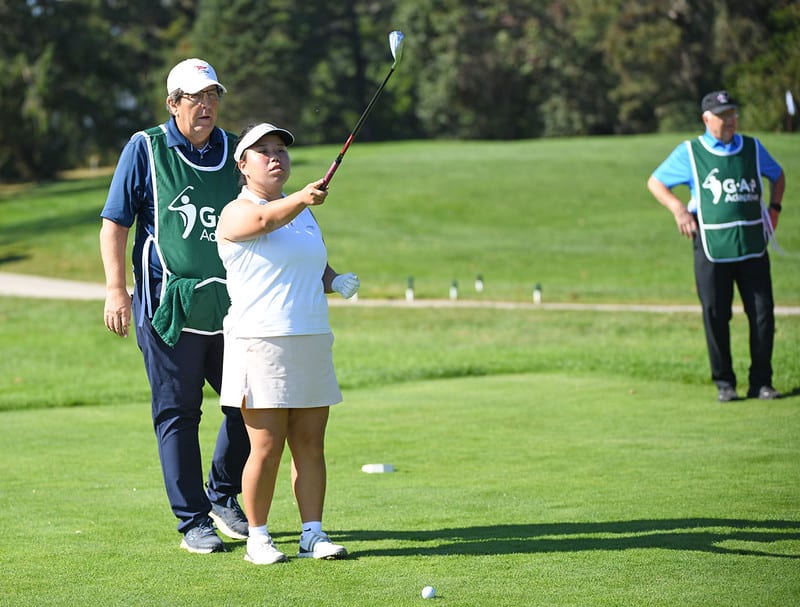
Their partnership is as much a part of her golf experience as the competition itself. While Larry provides the information necessary for Amanda to execute each shot, the opportunity to share those moments together has become one of the most meaningful aspects of her career.
"I could not even play on the golf course without a caddy so being able to have him with me and sharing those moments are so special."
Cunha's influence within adaptive golf extends well beyond her individual accomplishments. She started at the University of Arizona as a freshman in 2022, joining its developing Adaptive Golf Team, a collegiate program that would provide opportunities for adaptive athletes to compete while pursuing their education. She graduated in four years with a degree in communication and minors in public relations and Chinese.
As one of the program's earliest participants, Cunha found herself contributing to much more than tournament results. Recruiting prospective players, developing relationships and supporting fundraising efforts became part of her collegiate experience, providing a firsthand understanding of what it takes to establish opportunities within a growing segment of the sport.
"If I wanted the program to grow I had to find high school adaptive golfers and recruit them to play for our team," she said.
Unlike established collegiate athletic programs with extensive recruiting networks and resources, adaptive golf continues to develop the infrastructure necessary to support athletes at various competitive levels. Cunha's involvement at Arizona gave her an appreciation for the work happening behind the scenes, as well as the importance of having athletes actively participate in the growth of those opportunities.
"Being able to be resilient and push through is what true leadership is about."
Her pride in representing the university remains evident, particularly when discussing what the program could mean for future collegiate athletes. "I am so proud to have been a wildcat because it was the first of hopefully many adaptive golf teams in the country."
It's an experience that continues to influence how Cunha approaches her role within the adaptive golf community. Having benefited from opportunities created by others, she now recognizes the value of helping introduce the next generation of athletes to possibilities they may not have previously considered.
Since graduating, Cunha has remained committed to increasing awareness of adaptive golf, particularly among young people with disabilities and families who may be unfamiliar with the opportunities available to them. Through clinics and social media, she shares swing demonstrations, educational content and insight into how she plays as a visually impaired golfer, offering a perspective that can help make the sport feel more approachable.
Her outreach also extends to parents, many of whom may not realize that golf and other competitive sports are accessible to children with disabilities. Cunha encourages those interested in getting started to connect with someone familiar with the game, whether it's a friend, family member or teaching professional at a local course. She also highlights Rule 25 in the Rules of Golf, which provides modifications for players with disabilities and helps support their participation in the sport.
While introducing more people to golf is an important part of her mission, Cunha is especially passionate about increasing participation among women, particularly younger women with visual impairments.
"I would love to see more visually impaired women learn to play adaptive golf," she said.
She also hopes to see major golf brands take a more active role in supporting adaptive athletes, recognizing that greater industry involvement can help provide the resources, exposure and competitive opportunities necessary for continued growth.
It's a perspective worth considering as conversations surrounding the future of golf increasingly focus on participation and accessibility. Creating an introduction to the sport is valuable, but providing opportunities for athletes to develop, compete and remain engaged is equally important. Programs, partnerships and industry support all contribute to building those pathways, particularly for athletes whose opportunities have historically been limited.
The GAP Adaptive Championship is one example of that progress. Established in 2024, GAP Adaptive, an initiative of the Golf Association of Philadelphia, offers instructional opportunities through its No Limit Clinics alongside organized competition through its annual championship. Together, these programs provide opportunities for golfers with disabilities to experience the game, develop their skills and participate in a competitive environment.

For athletes like Cunha, events such as the GAP Adaptive Championship offer more than another tournament on the schedule. They provide a platform to compete, connect with fellow athletes and demonstrate the level of talent already present within adaptive golf. They also help introduce a broader audience to a segment of the sport that continues to gain visibility and momentum.
Cunha's latest victory adds another title to her competitive career, but her contributions to the game are taking shape in ways that extend beyond the scorecard. From helping build a collegiate program to sharing her experiences with aspiring golfers and their families, she is using the opportunities she's earned to help create more for others. As she continues pursuing her own goals in competitive golf, she hopes to see more young women discover that they, too, have a place in the game, whether that's picking up a club for the first time or eventually competing for a championship of their own.
For more information about GAP Adaptive and its programs, visit gapadaptive.org.
Author’s note: I had the privilege of attending both days of the championship. My thanks to the Golf Association of Philadelphia team and Atlantic City Country Club for hosting such an incredible event, with special appreciation for the superintendent and agronomy team for their work preparing incredible course conditions, and to the members for opening their property to the adaptive golf community.

Meredith Otero is the Founder of MET Marketing & Media, a strategic advisory and media relations
firm connecting people, brands and opportunities across golf, sports and hospitality. With nearly two decades of industry experience,
including extensive private-club leadership, she brings an insider’s perspective to the relationships and business decisions shaping
the game.
A writer, speaker, moderator and industry connector, Meredith contributes to Women's Golf Magazine and serves as a Marketing Expert Contributor for Bloom Lifestyle Magazine. She serves on the Board of Directors for Women in the Golf Industry (WIGI) and was recognized among KNOW's inaugural 2026 50 Women to KNOW in New Jersey. A former Division I athlete and current Young & Empowered Women mentor, she is passionate about creating meaningful connections and opportunities for the next generation.
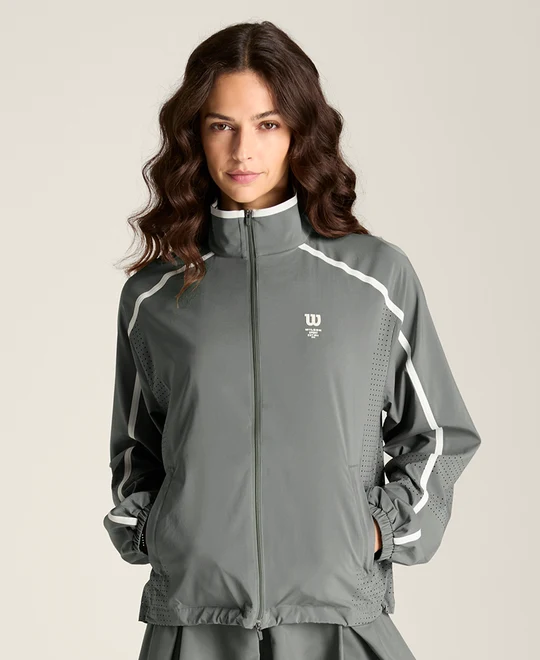
Wilson Victory Tech Jacket
From the course to the clubhouse. This fab jacket is sweat-friendly and ultra-lightweight. It’s the perfect protection for when the wind
buffs the fairways. Perforated side panels keep air flowing and the relaxed, modern silhouette turns heads. Get it. $148

TUMI Sport Duffel
Hit
the green with a bag personalized to your game. Choose to carry it as a duffel or backpack and add the embroidery of your choice. TUMI
brand ambassador Nelly Korda knows style and function are paramount and so do we. $695

KeepCup Ora Bottle in Nitro Pine
Why you'll love it! This KeepCup Ora Insulated Water Bottle allows you to sip through the straw or chug from the spout- one
bottle, two ways to drink. Made for all-day hydration! Perfect for 18-holes on the golf course or to take from your desk to
dinner. $50
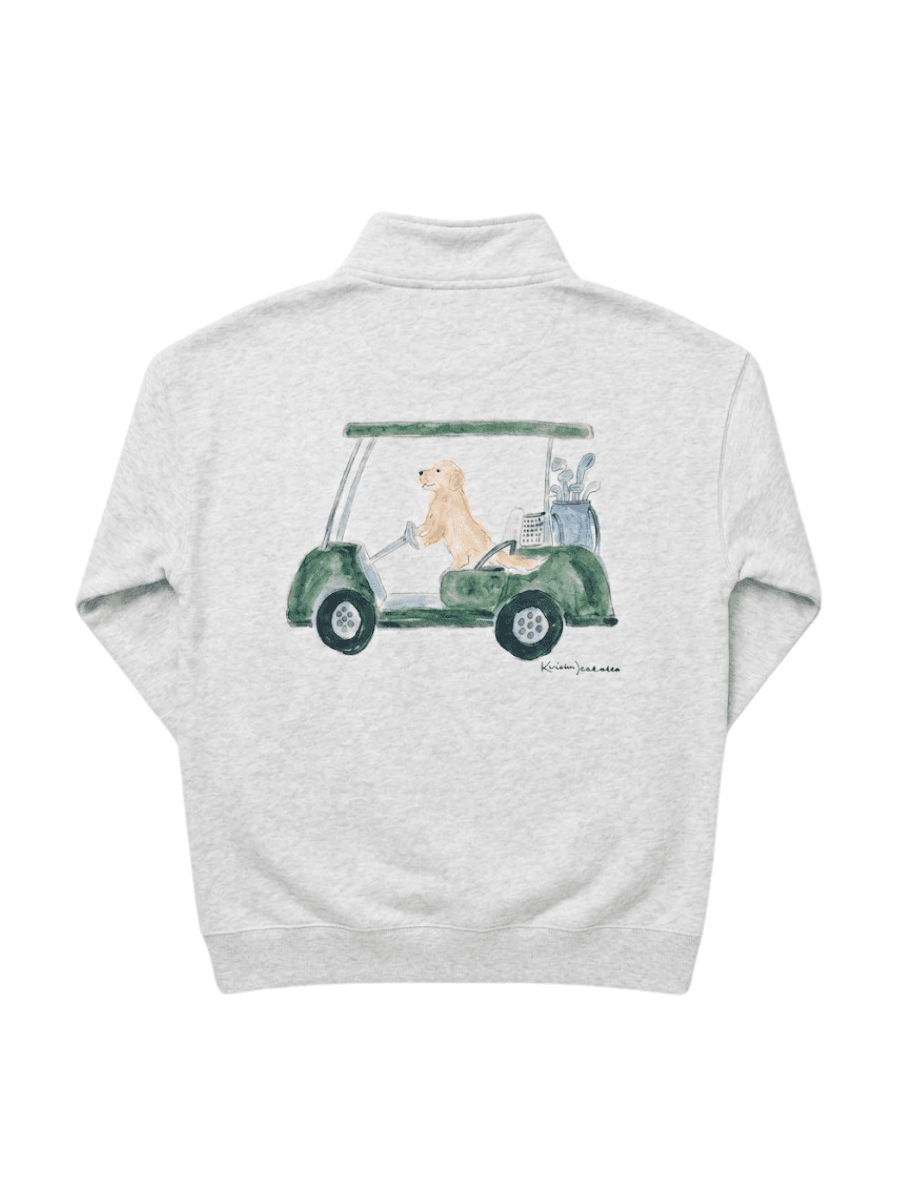
Flag &
Bow x Kristen Nicholls Polo Sweatshirt — Dog in Golf Cart
A limited-edition collaboration celebrating women in golf. This relaxed polo sweatshirt puts a fresh spin on classic golf style with a
polished collar and the Dog in Golf Cart design. Even better, $5 from every sweatshirt sold will be donated to Puppies & Golf. $105