CATEGORIES
- Latest News
- Interviews
- Golf Travel
- Features
- Juniors
- Competition
- Events
- Health
- Equipment
- Fashion
- Archive
INFORMATION
CURRENT ISSUE
SUBSCRIPTIONS



CATEGORIES
INFORMATION
CURRENT ISSUE
SUBSCRIPTIONS




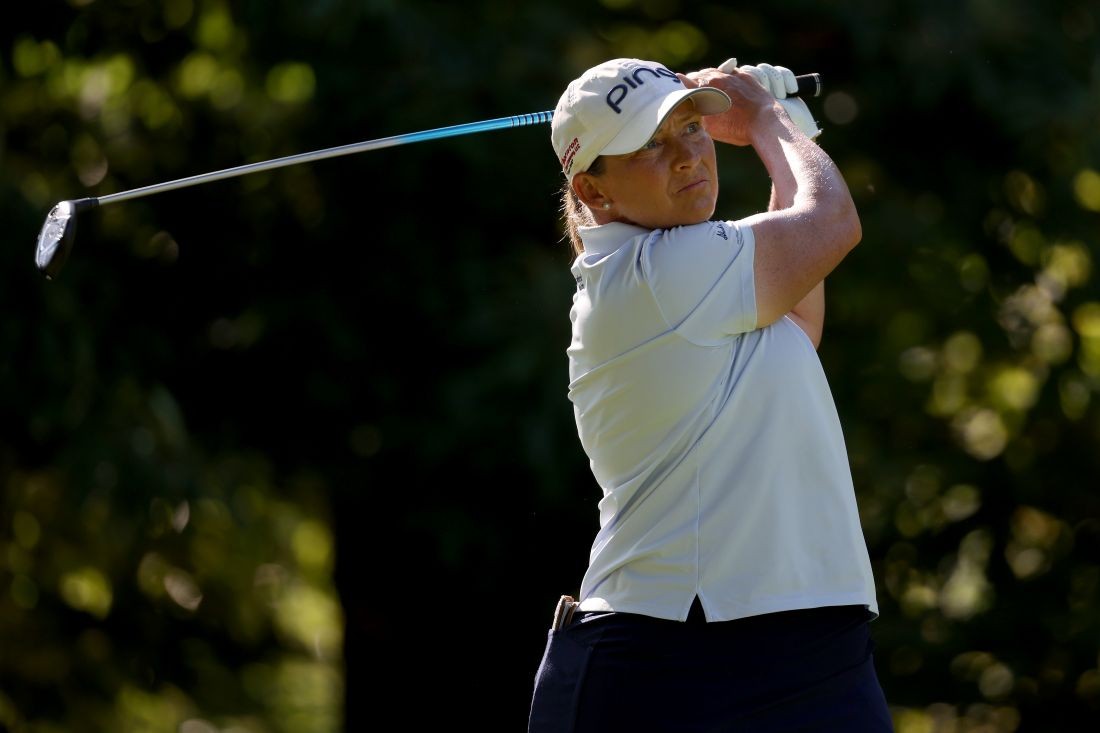
Photo: Angela Stanford courtesy of the LPGA & Getty Images.
As U.S. Team captain for the 2026 Solheim Cup, Angela Stanford brings decades of lived experience into the role, as a player, an assistant captain, and as someone who understands just how hard it can be to win on European soil.
Few would relish a captaincy debut that is not on home soil, but that does not include Angela Stanford, because it’s something she quietly
hoped for. “I really wanted to be a captain overseas,” she says.
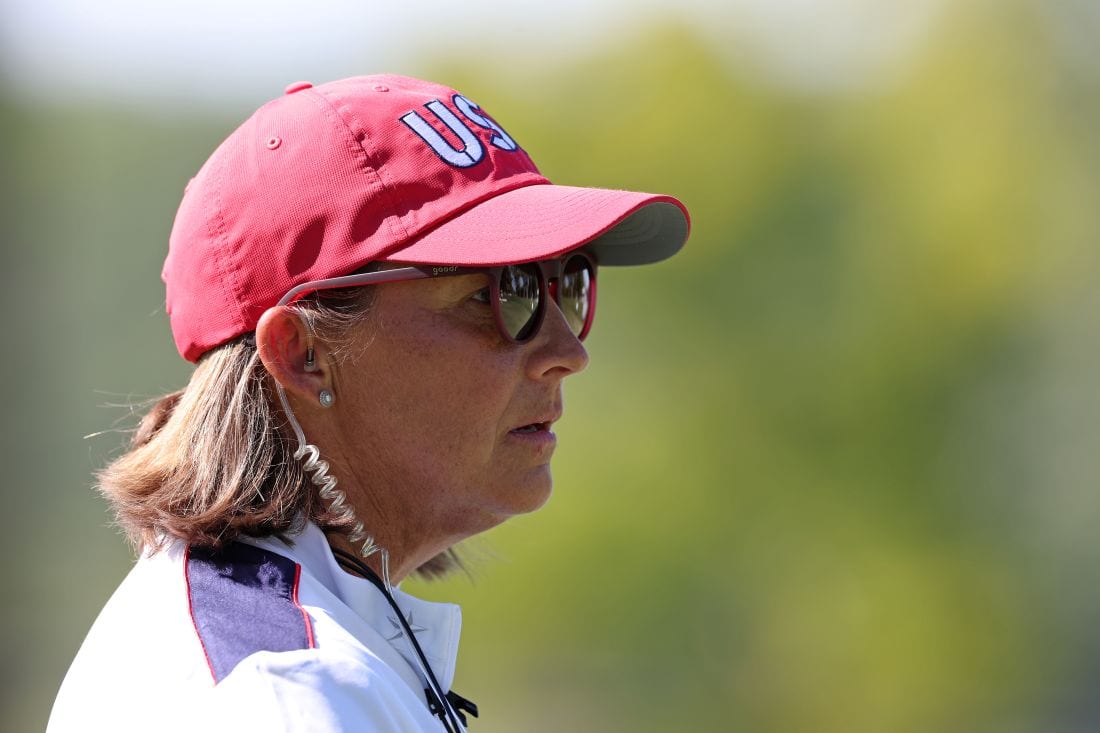
Photo courtesy of the LPGA & Getty Images
It is not a throwaway comment. Stanford has been part of U.S. teams that have experienced losses in Europe. She knows what it feels like to fly home after falling short. She also knows what it takes to reverse that narrative. Thinking back to Betsy King’s captaincy in 2007, when the United States secured its first European victory since 1996. King’s leadership left a mark.
“Betsy was kind of no-nonsense, you know, let’s go over there and get it done,” Stanford recalls. There was clarity in that approach. A seriousness that acknowledged the scale of the task, however, it was not devoid of warmth or support. For Stanford, that balance has stayed with her.
“There has to be a sense of urgency and seriousness,” she says. “But at the same time, it’s pretty fun. You have to find that balance of you want the team to enjoy their experience and have a good time. But going over there and losing and flying home is not fun.”
That tension, joy and edge, freedom and focus, will sit at the heart of her captaincy.
When the conversation turns to leadership style, Stanford focuses on character. “I hope that they see me as very authentic,” she says. “I’m
trying to be very upfront, open and honest with all the players.” She talks about compassion and humility as leadership tools, not
weaknesses. For her, authority does not come from control; it comes from clarity. “Ultimately, it’s not about me. I have to figure out how
to make sure that they’re playing for themselves.”
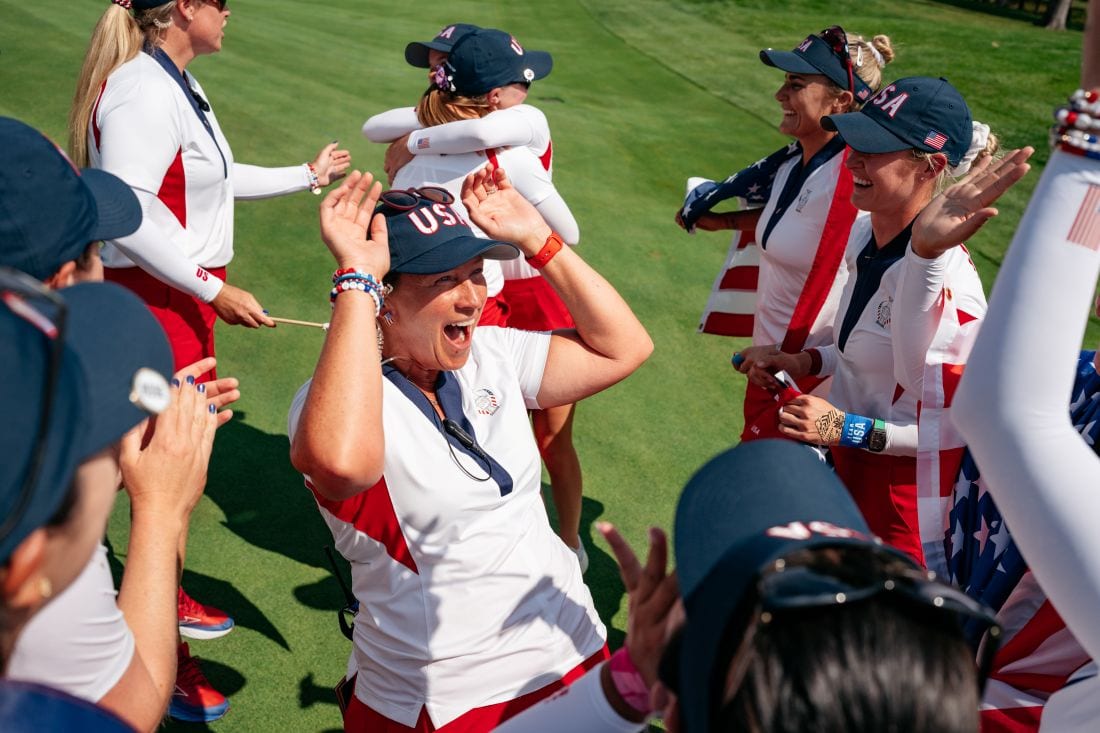
Photo courtesy of the LPGA
It is a perspective shaped by time. As a player, she admits, the focus is inevitably narrow. You prepare your game, manage your emotions and worry about your match. Leadership demands a different lens. “A leader who can figure out that it’s not about them faster is probably good,” she says.
Her goal is to redirect attention outward, towards teammates, collective objectives, and the moment itself. “If I can get them to focus on each other, focus on our goals, focus on the golf course, focus on the experience, then that’s the kind of leader I want to be.”
In an event defined by emotion and momentum swings, that emotional intelligence may matter as much as any pairing decision.
The U.S. Team will arrive in the Netherlands as defending champions. On paper, that offers reassurance. In reality, Stanford sees it differently. “It’s nice to go over there with the Cup and know that we are defending,” she says. “But we have to chase it. Starting that Friday morning, we have to go get the Cup.”
The dynamic of the Solheim Cup has shifted significantly over the past 15 years. Europe’s rise, particularly from the early 2010s onwards,
has tightened the margins. The matches are no longer defined by long stretches of dominance from either side. They are volatile, balanced
and unforgiving. It’s an evolution that Stanford respects and she knows that arriving as holders guarantees nothing, especially away from
home.
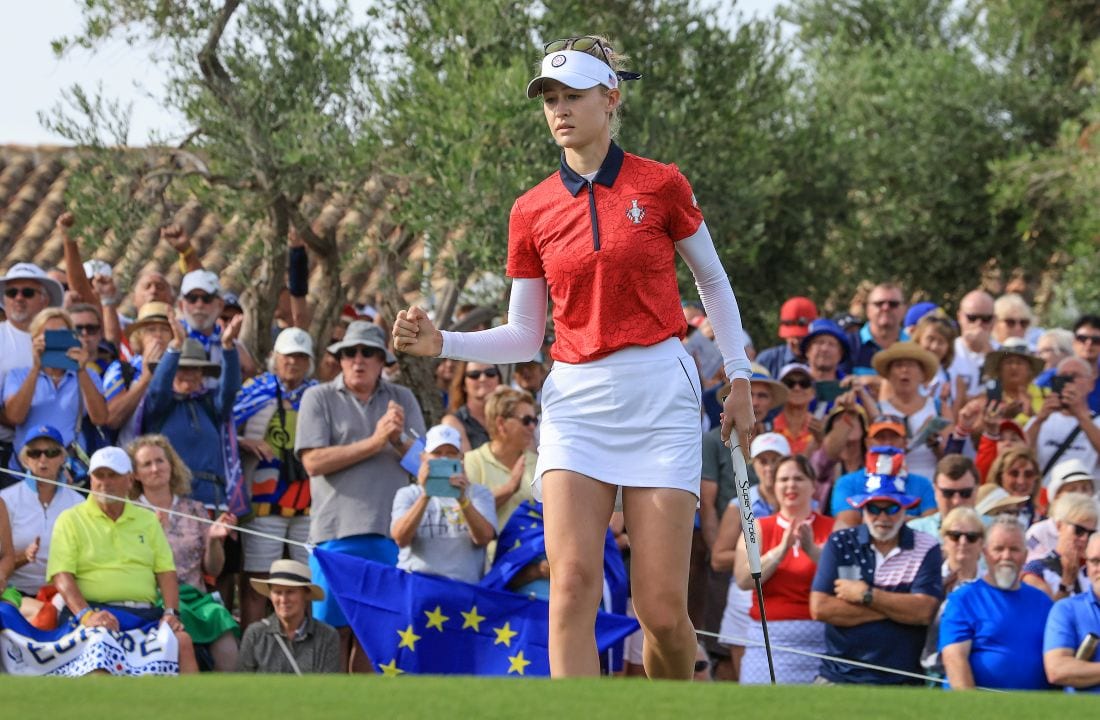
Photo: Nelly Korda celebrates holing a birdie putt by David Cannon, Getty Images
To win in Europe, a team must show resilience and composure when the atmosphere can potentially turn hostile, and be prepared to embrace discomfort instead of fighting against it. Which brings us back to the environment.
One of the most striking differences between a home and away Solheim Cup, Stanford believes, is what happens when players leave the safety of their inner circle.
“When you’re at home, it seems like when you leave the team room, it’s an extension of the team room,” she says. In the United States, the cheers follow you everywhere, from hotel lobbies to practice ranges. “It’s not that way in Europe.”
That contrast elevates the importance of the team room itself. For Stanford, the team room goes beyond logistics, providing the psychological anchor the group will need away from home. “The team room, to me, is very special. It’s a place that we come together.” She wants players to feel the scale of what they are stepping into, recognizing it as privilege rather than pressure.
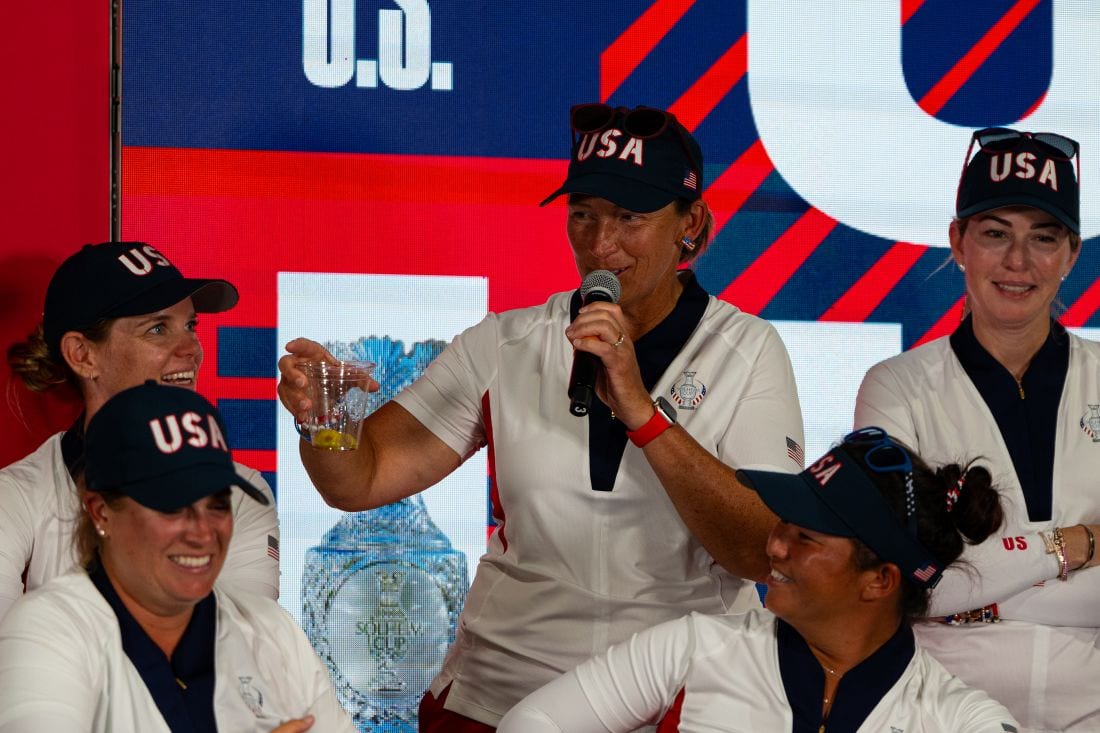
“When they walk into that room, [I want them] to feel that they are a part of history. You’re getting to do something that not many people get to do, and now you’re getting to put your name in the history book.”
There will be intention behind what fills that space, the imagery on the walls, the stories told, the videos shown. It will serve as both reminder and refuge.
Stanford’s most recent Solheim Cup experience away from home came as assistant captain at Finca Cortesin in 2023. That week expanded her understanding of what the captain truly manages. “When you play on the team, you’re worried about you,” she says. “But as an assistant, and now as a captain, you see the big picture. You have the 30,000-foot view all the time.”
From transport logistics to external noise, from media demands to crowd dynamics, the layers are relentless. Particularly abroad, where unfamiliar venues and local organizers are navigating the scale of the event. “It can feel like chaos around you all the time, because you can’t control anything,” she says.
The Netherlands will host the Solheim Cup for the first time in 2026. Although this brings a fresh energy, there is also something around the unknown and potential unpredictability. Something that Stanford is realistic about. “You can have a game plan, but then you get in the middle of it and something goes wrong.”
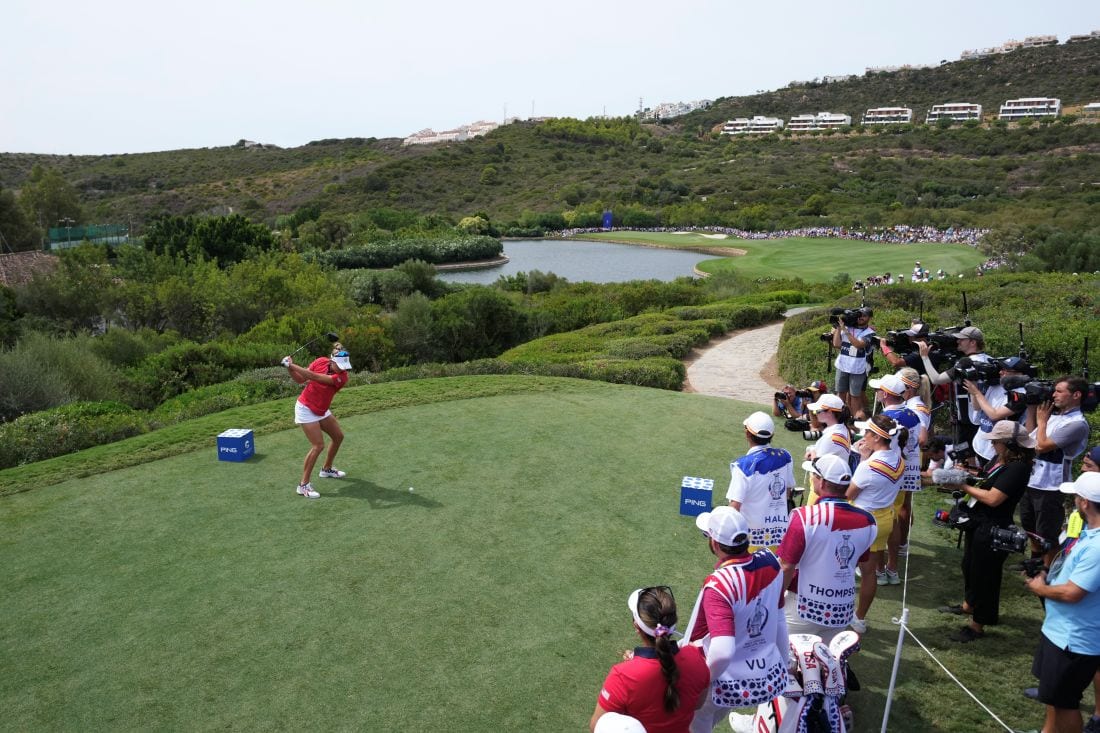
Photo: Lexi Thompson hits a tee shot on the first hole by Angel Martinez, Getty Images
Her solution is to anticipate chaos rather than attempt to eliminate it. “I just need to be ready to have our team prepared for mass chaos all the time. But inside our bubble, we’ve got to take care of us, and that’s on the assistants and me.”
Beyond the competition on the fairways, Stanford sees 2026 as a platform moment for women’s professional golf. The Solheim Cup has grown steadily across her career. She remembers her first appearance in Sweden in 2003. The fans were passionate then and they remain so now. While the venues have evolved, the build-outs have expanded and the scale feels bigger each cycle.
“We gradually grow each year,” she says. “Every time I leave a Solheim, I’m like, gosh, how are we going to top that?” Yet growth, in her view, is still incomplete. “I still run into people that don’t know what the Solheim Cup is,” she says. For a competition of its intensity and history, that surprises her. It also motivates her. “If we get to the end of this and however many more thousands of people know about the Solheim Cup, that’s my job here.”
Taking the event to a new country amplifies that mission. Introducing women’s professional golf on this stage to Dutch fans, many of whom may be experiencing it for the first time, carries responsibility. “That week’s going to be really important,” she says. “We’re going to have to bring our best that week, and I know we will.”
For Stanford, success in 2026 will be measured in more than points on a board. It will be reflected in how her team carries itself, how it responds under pressure, and how many more people leave knowing what the Solheim Cup represents.
She wanted this role overseas and understands exactly what it will demand. With the Solheim Cup in American hands and the challenge set on European soil, her message is clear: defend it, and chase it harder still. Because in Europe, nothing is given and history, as she knows well, is earned.
 Photo
courtesy of the LPGA
Photo
courtesy of the LPGA
20th edition of the biennial Europe vs USA women’s golf team competition.
Dates: September 7-13 2026 (official match days September 11-13).
Venue: Bernardus Golf, Cromvoirt, North Brabant, Netherlands.
Location: Bernardus Golf is located in Cromvoirt, which is near the Dutch cities of Eindhoven, 's-Hertogenbosch (Den
Bosch), and Tilburg in southern Netherlands.
The course is a heathland layout with penalty areas and a compact design, created by course architect Kyle Phillips. It has previously hosted the Dutch Open on the DP World Tour.
Eindhoven Airport (~20 miles away) or Amsterdam Schiphol (by train + shuttle).
Den Bosch Train station will be the central hub for those arriving via public transport. There is no parking at the venue.
Shuttle Bus: approximately 8 miles from the course (20 minutes travel time).
Rental Bike - Pick up a rental bike near the station and enjoy a scenic 6-mile ride (around 30 minutes).
Available via the official 2026 Solheim Cup website: https://www.solheimcup2026.golf
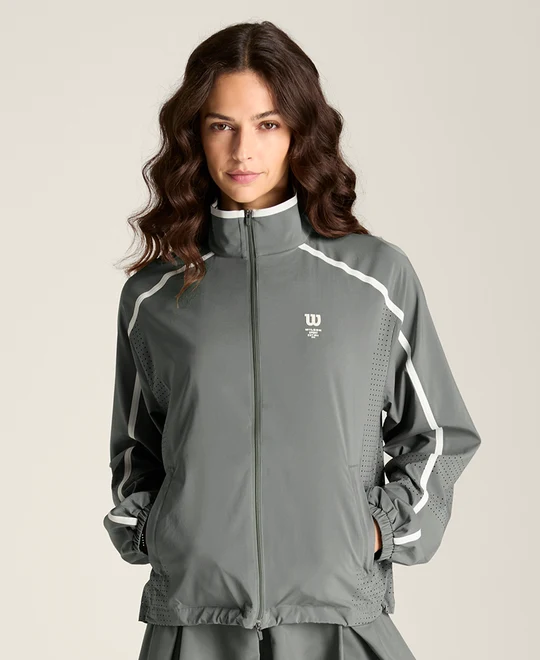
Wilson Victory Tech Jacket
From the course to the clubhouse. This fab jacket is sweat-friendly and ultra-lightweight. It’s the perfect protection for when the wind
buffs the fairways. Perforated side panels keep air flowing and the relaxed, modern silhouette turns heads. Get it. $148
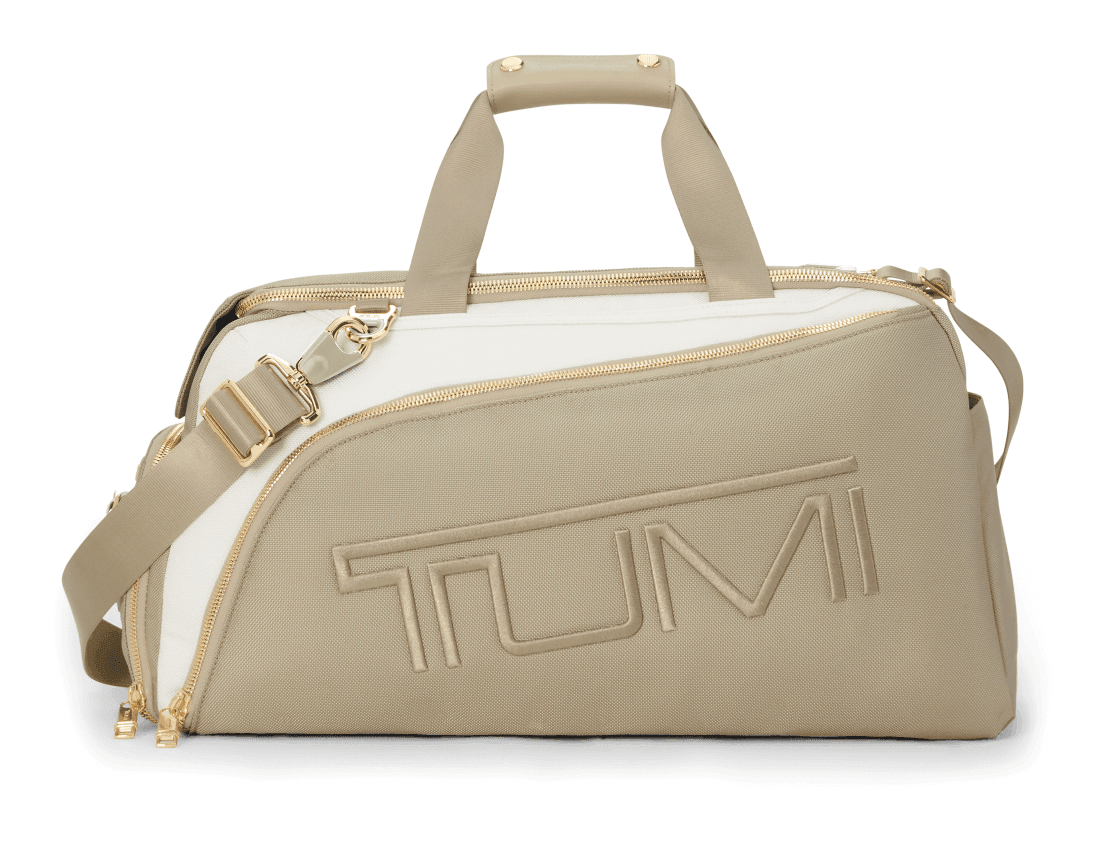
TUMI Sport Duffel
Hit
the green with a bag personalized to your game. Choose to carry it as a duffel or backpack and add the embroidery of your choice. TUMI
brand ambassador Nelly Korda knows style and function are paramount and so do we. $695
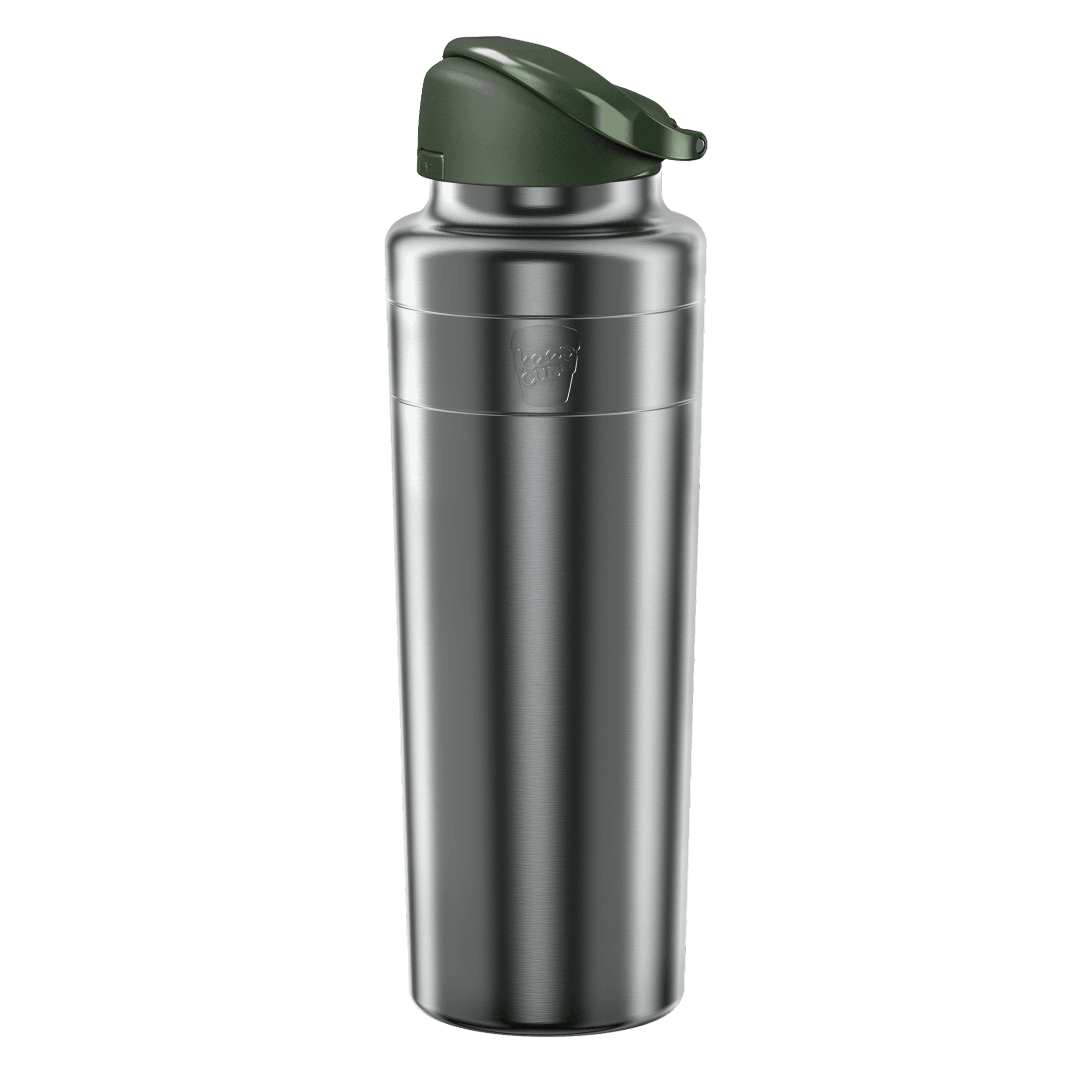
KeepCup Ora Bottle in Nitro Pine
Why you'll love it! This KeepCup Ora Insulated Water Bottle allows you to sip through the straw or chug from the spout- one
bottle, two ways to drink. Made for all-day hydration! Perfect for 18-holes on the golf course or to take from your desk to
dinner. $50
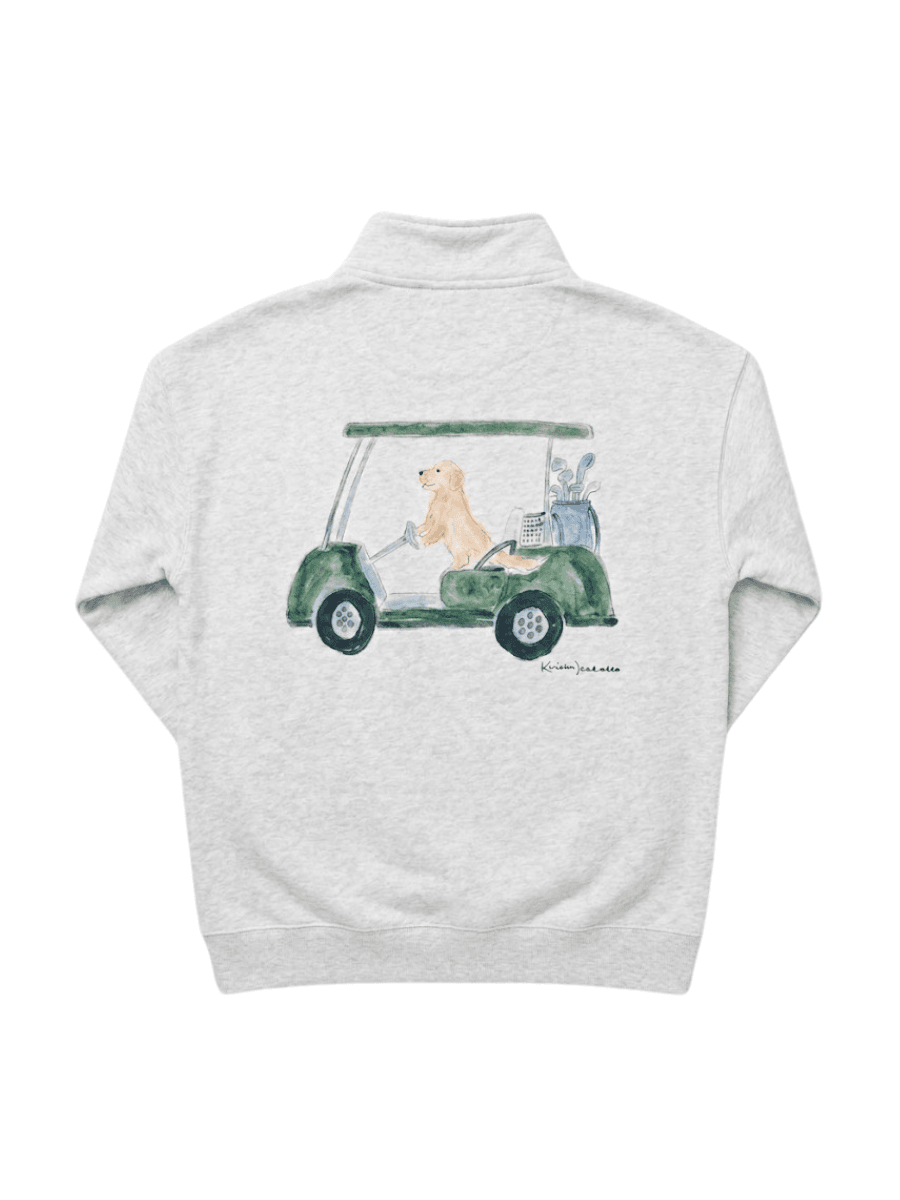
Flag &
Bow x Kristen Nicholls Polo Sweatshirt — Dog in Golf Cart
A limited-edition collaboration celebrating women in golf. This relaxed polo sweatshirt puts a fresh spin on classic golf style with a
polished collar and the Dog in Golf Cart design. Even better, $5 from every sweatshirt sold will be donated to Puppies & Golf. $105



.jpg)